Legalisation stamp for cross-border documents
Legalisation is the chain of marks a document collects on its way to being accepted in another country, and each body in that chain adds its own, which is why the wording and the date on each one has to be exact.
Legalisation stamp templates, ready to edit
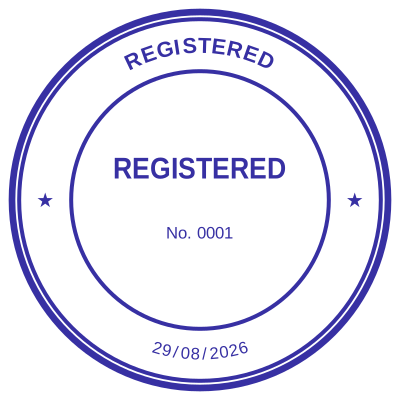

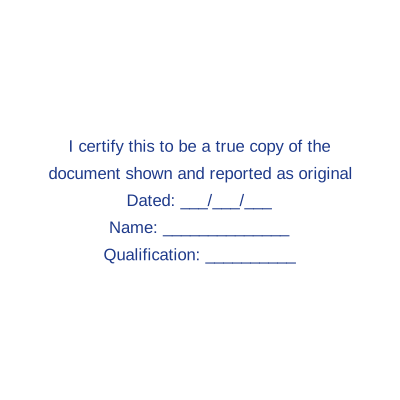
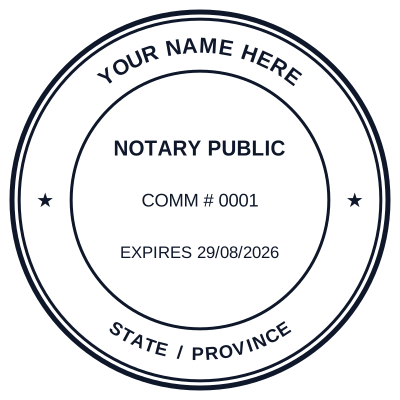
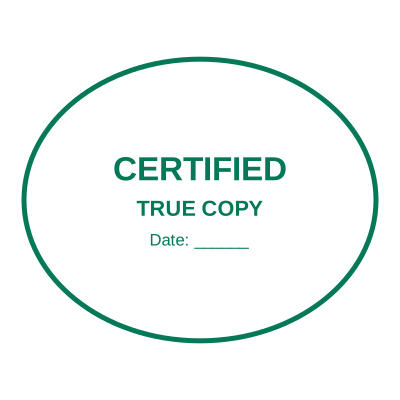

Open the stamp maker with any of these
Every preview on this page carries a faint Estamplab watermark. Your own download does not: the editor renders your stamp again, clean, as a transparent PNG, an SVG or a PDF. See the full template library.
When to use Legalisation stamp
- Documents prepared for embassy legalisation
- Apostille support paperwork
- Corporate documents used overseas
- Educational records sent abroad
How to make Legalisation stamp
- Open the stamp maker and pick the Legalisation stamp template, or type your own wording.
- Pick the border style, set the colour, and place any date, time or serial line where it fits.
- Download the PNG for everyday use, or the pack when the SVG and PDF are going to matter later.
Frequently asked questions
Is the legalisation stamp free?
Yes to design it, no to download it. Building a legalisation stamp costs nothing and needs no account, and you can edit it for as long as you like. Getting the file out is $1.50 for a single image format, or $3.00 for the full pack.
Can I add a date to the legalisation stamp?
Add a date line anywhere on the legalisation stamp. If you type a date it stays put; if you leave it empty it becomes today's date each time the file is generated, which is usually what a dated stamp is for.
What format do I get?
Single formats are the images: a transparent PNG, a white-background PNG or a JPG. The vector and document versions of the legalisation stamp, meaning SVG, PDF, EPS and Word, come with the all-formats pack.
Template, or something I actually build?
It is a legalisation stamp maker rather than a legalisation stamp template you download and then fight with in a word processor. Build a legalisation stamp online from a legalisation stamp sample, or start empty and use it as a legalisation stamp generator: every part of the legalisation stamp design stays adjustable. The legalisation stamp price covers the file only, $1.50 for a transparent legalisation stamp png or $3.00 for every format.
Can I make an apostille or embassy stamp?
No. An apostille and an embassy legalisation stamp are issued by designated authorities, and producing one you are not that authority is forgery. What belongs here is the mark your own firm or office puts on the document before it enters that chain.
Estamplab is a design tool. What a notarial or legal mark must carry is set by the authority that issued the commission or the appointment, and it differs sharply between jurisdictions, so check your own paperwork before relying on any layout here. This page describes common practice rather than giving legal advice. Only produce a mark you hold the authority to use: a stamp in the name of an office you do not hold is forgery.