Received stamp with date
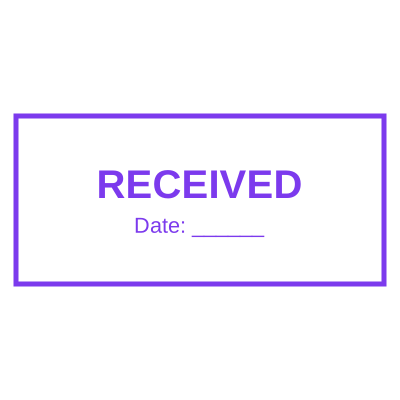
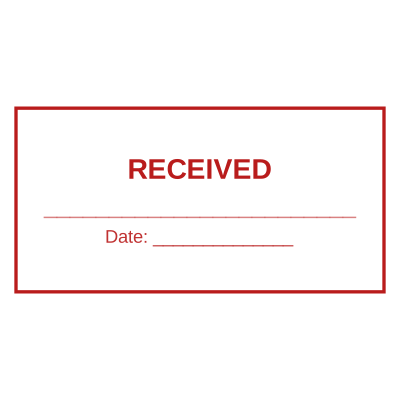
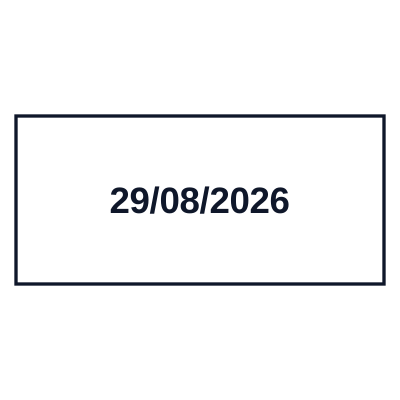
A received stamp with a date is the record that a document arrived and when. It is usually a rectangular block: RECEIVED across the top, the date below it, and often the name of the office or department. In accounts payable it starts the payment clock, and at a front desk it is the only proof of the arrival time anybody keeps.
Templates you can start from

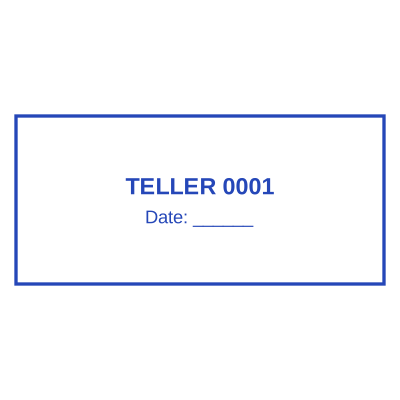
How to make it
- Choose a rectangular block. It sits better in a margin than a circle.
- Put RECEIVED on the top line, in capitals.
- Add the date placeholder below it, and the time if the hour matters.
- Add the office or department name if more than one desk stamps post.
What you get
- RECEIVED with a date that resolves at download
- Optional time for deadline-sensitive post
- An office or department line
- Rectangular blocks sized for a document margin
Why the department line earns its place
Because "received" without a where is half a record. When a document goes missing between the post room and the department that needed it, a stamp naming the first desk it touched is what narrows the search. It is also what stops two departments each assuming the other logged it. One extra line at design time, and it is the line most often missing from stamps that turn out to be useless in an audit.
Questions
Should it carry a time as well as a date?
If anything you receive has a same-day deadline, yes. Tenders, court filings and payment runs all turn on the hour, and a date-only stamp cannot settle a dispute about whether something arrived before the cutoff.
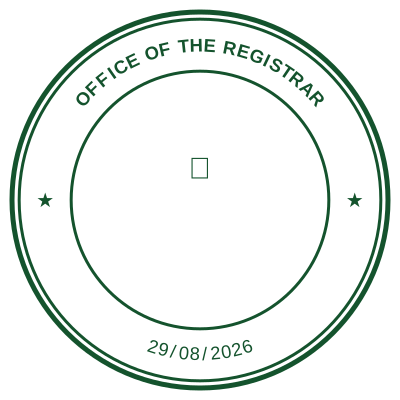
Round or rectangular?
Rectangular, almost always. A received stamp goes in the margin or the header of a document that is already full of text, and a block fits that space where a circle does not.
Estamplab is a design tool. This page describes common commercial practice rather than giving legal advice, and practice changes. Where a specific document matters, check the requirement with the body receiving it. Only produce a mark your own organisation or your own credentials are entitled to use.