Round rubber stamp design
A round rubber stamp design differs from a round seal design in one physical respect: rubber spreads ink. Lines come out slightly thicker on paper than they are in the artwork, and tight gaps close up. So a design intended to be cut in rubber wants a little more air than one that will only ever be placed as a file, and the difference is roughly the thickness of one stroke.
Templates you can start from





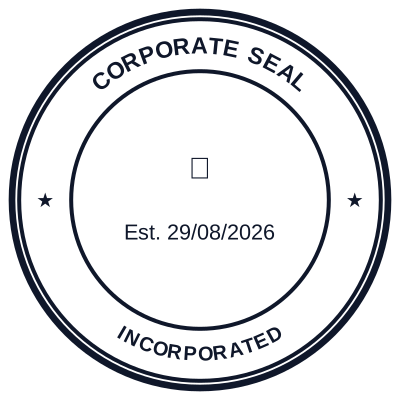
How to make it
- Design the face as usual, at the real diameter.
- Open the gaps between the ring text and the border slightly.
- Avoid strokes thinner than about 0.3mm at 40mm.
- Export as SVG if a manufacturer is cutting it.
What you get
- Real millimetre sizing for the cut file
- Border weights that survive ink spread
- SVG output that a plate cutter accepts
- A preview at the size it will be cut
What ink spread does to a design that ignored it
Two things, both familiar from stamps that came back from the shop looking wrong. Thin rings fatten until a double ring reads as one thick band. And counters, the enclosed gaps inside letters like e, a and o, fill in, so small ring text turns into a row of dark blobs after a few impressions as ink builds up on the plate. Designing with slightly more space than looks necessary on screen is what prevents both.
Questions
Does this matter for a digital stamp?
No. A file placed on a PDF has no ink and no spread, so it can carry finer detail than rubber can. This page is about the case where the design will actually be cut.
What file does a stamp shop want?
SVG, usually. It is vector, at true dimensions, and it goes straight to a laser or a polymer plate without being resampled. A PNG has to be traced first and the trace is where detail is lost.
Estamplab is a design tool. This page describes common commercial practice rather than giving legal advice, and practice changes. Where a specific document matters, check the requirement with the body receiving it. Only produce a mark your own organisation or your own credentials are entitled to use.