Custom stamps: what to order, and when you do not need to
Custom stamps come in two forms: a physical self-inking or pre-inked block ordered from a stamp shop, and a digital stamp applied to the file itself. Which you need depends on whether the document ever reaches paper.
Custom stamps: what to order, and when you do not need to templates, ready to edit
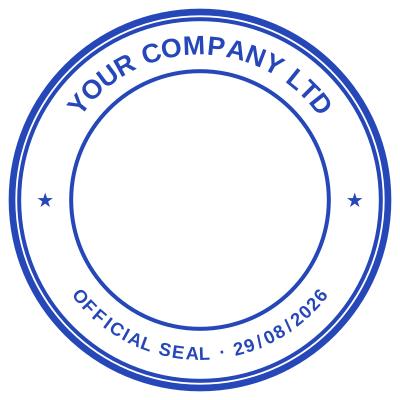
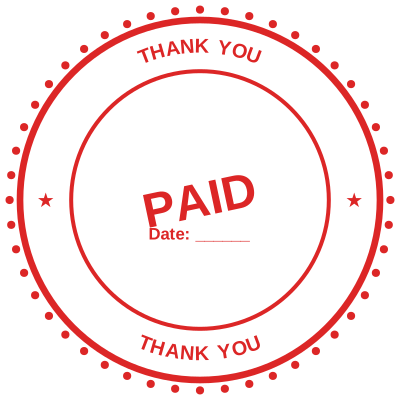
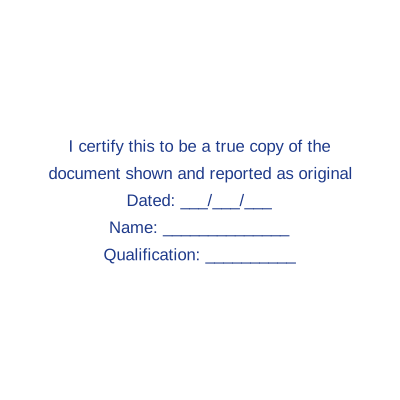
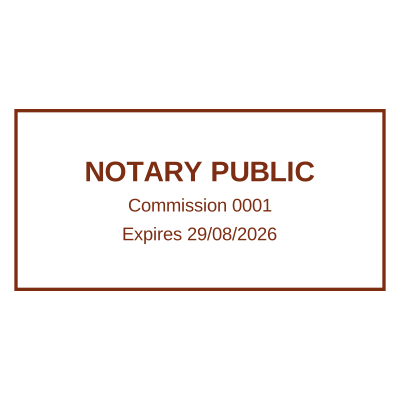
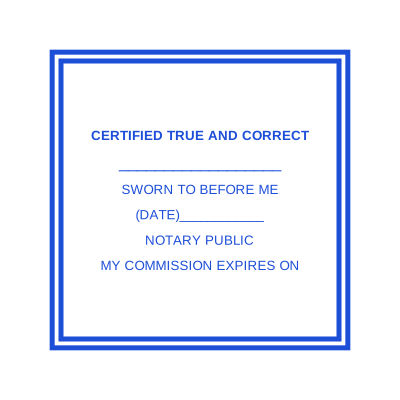
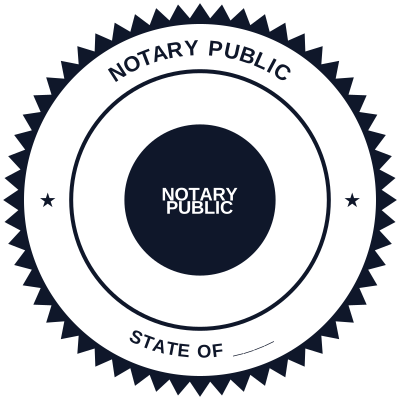
Open the stamp maker with any of these
Every preview on this page carries a faint Estamplab watermark. Your own download does not: the editor renders your stamp again, clean, as a transparent PNG, an SVG or a PDF. See the full template library.
Almost everybody searching for custom stamps has a document and a habit, and the habit is older than the document. The question worth asking first is where the paperwork actually ends up, because that decides the answer completely and nothing else does. If it ends up on paper somebody hands over a counter, order a block. If it ends up as a PDF in an email, a block means printing the document in order to mark it and scanning it back in, which is three steps to avoid one.
What you get
- Personalised stamps with your own wording, logo and layout, free to design and preview at true size. Personalized stamps too: the spelling changes with the country and the tool does not.
- Custom made stamps for business: company marks, address stamps, PAID, RECEIVED, APPROVED and dated ones.
- Self inking stamps custom cut to your wording are what a stamp shop makes from a layout like this one.
- Customizable stamps in the literal sense: change the wording next month without re-cutting anything.
- A layout you can take to a stamp shop if you decide you want the physical block after all.
- No minimum order, no delivery, and nothing to wait for.
- We do not sell physical blocks, and this page says which situations need one.
How to make it
- Open the stamp maker and pick a shape, or start from a template.
- Type your wording, then set the colour, border and size.
- Add the date, time, serial number or logo, and position each one.
- Preview it live, then download. Designing and previewing are free.
Questions
Do I need a physical custom stamp or a digital one?
Ask where the document ends up. Paper handed across a counter, a delivery book, a passport queue, a clinic reception: order a block, and a self-inking one. A PDF invoice, a Word contract, a scanned form emailed back: a physical stamp means printing the document purely so you can mark it and scan it again, which is worse in every way including how it looks. Many businesses genuinely need both, one at the front desk and one on the files.
What is the difference between self-inking and pre-inked stamps?
A self-inking stamp has a rubber die on a turning mechanism that re-inks itself from a built-in pad, and it is the office default: tens of thousands of impressions, replaceable pad, crisp enough for most work. A pre-inked stamp holds the ink inside the die itself, gives a sharper and more even impression, lasts longer between re-inks, and costs more. For fine detail or a logo, pre-inked is noticeably better. For a PAID stamp, nobody will ever notice.
Where do I order custom self inking stamps?
From a stamp shop, online or local, and there are plenty of good ones. What we would suggest is designing the layout first, at the real size in millimetres, and checking it before you commit, because the commonest complaint about an ordered stamp is not the quality but the wording: a name that does not match the register, a line too small to read once pressed, a logo that turned into a blob. Getting that right is free here, and the design goes to whoever cuts the block.
Can I get personalised address stamps self inking?
From a stamp shop, yes, and address stamps are the single most common personalised order there is. Before ordering, put the postcode on its own line and keep it to four lines: that is what makes the difference between an address stamp somebody can read at a sorting office and one they cannot.
What size should a custom stamp be?
A round company seal is usually 38mm to 42mm across. A rectangular address or details stamp is commonly around 58mm by 22mm. The real constraint is text size: below about 6pt at true size, a pressed impression stops being reliably readable, so every line you add shrinks the others. Design it at the size it will be used at rather than zoomed in, which is the mistake that produces an unreadable block.
Are custom ink stamps and rubber stamps the same thing?
In ordinary use, yes. Rubber stamp describes the die, ink stamp describes what it leaves, and custom stamp describes it being made to your wording. Nobody in a stamp shop will be confused by any of the three. The only distinction that matters commercially is self-inking against pre-inked against a plain die you press onto a separate pad.
Estamplab is a design tool. This page describes common commercial practice rather than giving legal, tax or financial advice, and practice changes. Where a specific document matters, check the requirement with the body receiving it. Only produce a mark your own organisation or your own credentials are entitled to use.