Advocate stamp format, with a template you can edit
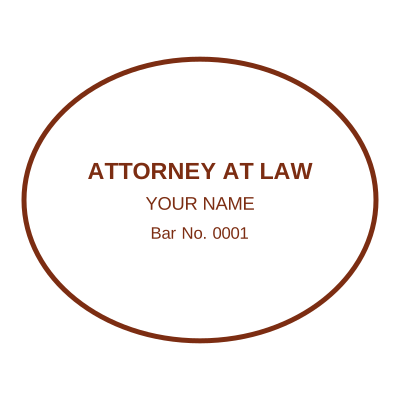
The usual advocate stamp format is the advocate name, the word Advocate, the enrolment or roll number, and the court or bar association. It is pressed beside the signature on pleadings, vakalatnamas and certified copies.
Advocate stamp format, with a template you can edit templates, ready to edit




Open the stamp maker with any of these
Every preview on this page carries a faint Estamplab watermark. Your own download does not: the editor renders your stamp again, clean, as a transparent PNG, an SVG or a PDF. See the full template library.
An advocate stamp is a professional mark, so its content is set by the bar council or law society that enrolled you rather than by preference. The format below is the ordinary one and the enrolment number is the part that matters: it is the only line on the stamp that anybody actually checks, because it is the line that ties the signature to a roll.
What you get
- Name, the designation Advocate, the enrolment or roll number, and the court or bar.
- A rectangular block, which is the common form, or a round seal where local practice uses one.
- A date line that fills itself in, for anything filed on the day.
- The same layout for a Word file, so it can sit in a vakalatnama template.
- A transparent PNG, so the signature underneath still reads through it.
- Applied straight onto the PDF pleading rather than pasted as a picture.
How to make it
- Open the stamp maker and pick a shape, or start from a template.
- Type your wording, then set the colour, border and size.
- Add the date, time, serial number or logo, and position each one.
- Preview it live, then download. Designing and previewing are free.
Questions
What is the format of an advocate stamp?
Four lines is the usual advocate stamp format: the name as enrolled, then Advocate, then the enrolment or roll number, then the court or bar association. Some practitioners add a chamber address or a telephone number underneath, which is fine on a letter and makes the block too tall for a pleading margin. Your bar council may specify the wording, so check its rules before settling on one.
Can I get the advocate stamp format in Word?
Yes. Download the Word version and the stamp arrives as an object that floats over your document rather than pushing the text down the page, which is what happens when a plain image is pasted into a vakalatnama or a pleading template. The date and any serial stay editable text in that version.
Where does the advocate stamp go?
Beside or immediately beneath the signature, on the same side of the page. On pleadings it sits in the signature block at the end; on a certified copy it goes with the certification wording rather than in the margin. Keep it clear of the court seal and of any filing stamp the registry will add.
Does an advocate stamp certify a copy?
The stamp identifies who certified; the certification is the wording. A certified true copy needs the words, the signature, the capacity and the date, and where an advocate is authorised to certify, the stamp supplies the capacity. Whether an advocate may certify a particular document is set by local rules and by the body receiving it, so check with them.
Can I make one for another advocate?
On their instruction, yes. Not otherwise: the stamp asserts an enrolment, so making one naming a roll number that is not yours is a misrepresentation of professional status rather than a design decision.
Estamplab is a design tool. This page describes common commercial practice rather than giving legal, tax or financial advice, and practice changes. Where a specific document matters, check the requirement with the body receiving it. Only produce a mark your own organisation or your own credentials are entitled to use.