Is a signature stamp legal, and do I need a company stamp?
Before using a signature or company stamp, settle three practical things: who is authorised to apply it, where it is kept, and what the organisation receiving the document actually asks for. Requirements differ by country and by document, so the recipient is the reliable source rather than any general rule.
Is a signature stamp legal, and do I need a company stamp? templates, ready to edit
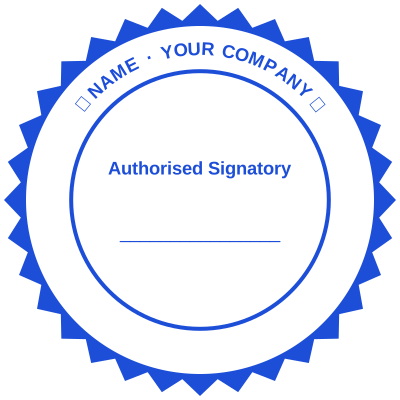
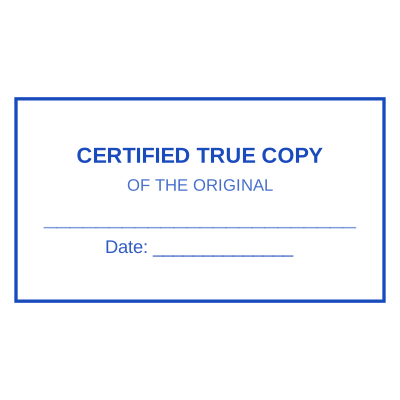
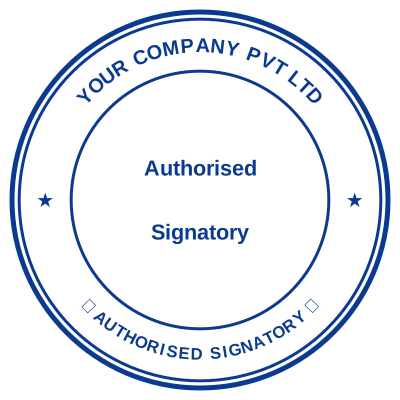
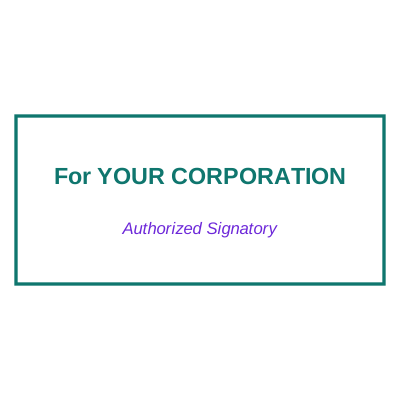
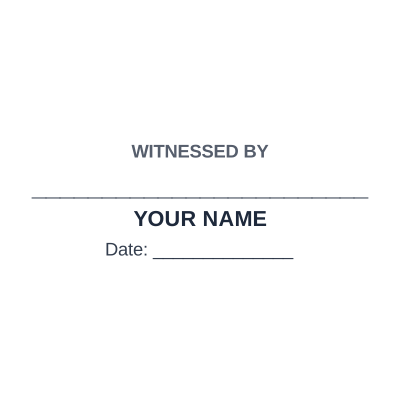

Open the stamp maker with any of these
Every preview on this page carries a faint Estamplab watermark. Your own download does not: the editor renders your stamp again, clean, as a transparent PNG, an SVG or a PDF. See the full template library.
This page is practical guidance from a stamp design tool, not legal advice, and it is worth saying that first because most pages answering these questions are selling rubber blocks. What follows is how organisations normally handle stamps and what to check before you rely on one. For whether a particular document in a particular country needs a particular instrument, ask the body receiving it, or a lawyer where the stakes justify one.
What you get
- Where a signature stamp is accepted, it generally turns on three practical things: the signer authorised it, they meant to sign that document, and the other side accepted it. Those are questions of evidence and of your own controls.
- The risk with a signature stamp is not legality, it is custody. Anyone holding the block can sign as you, and if it is disputed the question becomes who had access to it.
- A company stamp is asked for far less often than people assume. Many jurisdictions have made the common seal optional, so the practical question is usually what the recipient wants rather than what is compulsory.
- Where it is still required, it is usually for a defined class of document, deeds, certain registry filings, some share certificates, rather than for correspondence or invoices.
- The significant exception is the company chop across much of Asia, where the chop can bind the company on its own, which is why custody there is a governance matter rather than a stationery one.
- Contracts often require a stamp even when the law does not. A counterparty asking for your company stamp is exercising their own policy, and that is a real requirement even though no statute imposed it.
How to make it
- Work out what the specific document requires, not what stamps require in general.
- Ask the counterparty what they will accept, because their policy binds you either way.
- If a stamp is needed, design it here with the entity name and registration number on it.
- Decide who holds it and write that down, which is the control that actually matters.
Questions
Is a signature stamp legally binding?
That depends on your jurisdiction and the document, and it is a question for a lawyer rather than for a stamp tool. The pattern most often described is that it turns on authority and intent: whether the signature was applied with the authority and the intent of the person it represents. What decides a dispute is not whether a stamp was used but whether you can show it was authorised: who held it, who applied it, and whether the document was issued in the ordinary course of business. That is why a signature stamp used by one person under their own control is on much safer ground than one kept in a shared drawer.
Do I need a company stamp?
Often not, and less often than people expect. Most jurisdictions have made the common seal optional and permit a company to execute documents by the signature of its officers. Where a stamp is still required it is for particular instruments rather than for everyday paperwork. The practical answer is to check the requirement for the specific document, because a general rule does not exist, and to ask the counterparty what they need, because their policy binds you even where the law does not.
Does a stamp make a contract more valid?
No, not by itself. A contract is formed by agreement, and adding a mark does not strengthen an agreement that was already made. What a stamp does is evidential: it shows the document came from the entity, which is worth something later when somebody asks who issued it. That is a real benefit and it is not the same as validity.
Is a digital stamp treated differently from a rubber one?
For the ordinary marking uses, received, paid, approved, no, because nothing turns on the instrument. Where a rule requires a registered physical seal, an applied image does not satisfy it, and no online tool can change that. The distinction is about what a specific rule demands, not about digital versus physical in general.
Who is allowed to make a company stamp?
Somebody acting for that company. Producing a stamp or seal for an entity you do not represent, and in particular for a public body, a bank or a court, is forgery in most jurisdictions and is prohibited by the Terms of Service here. That boundary applies whether the stamp is cut in rubber or exported as a PNG.
Is any of this legal advice?
No, and treat any page that implies otherwise with suspicion, especially one selling stamps. Requirements differ by country, by document and sometimes by industry regulator. This is the shape of the question so you know what to ask; a lawyer in your jurisdiction answers it for your document.
Estamplab is a design tool. This page describes common commercial practice rather than giving legal, tax or financial advice, and practice changes. Where a specific document matters, check the requirement with the body receiving it. Only produce a mark your own organisation or your own credentials are entitled to use.