Certified translator stamp maker
A certified translator round stamp template you can edit: name, language pair, accreditation body and number, in a round or oval seal you download as a transparent PNG or apply to the translation itself.
Certified translator stamp maker templates, ready to edit
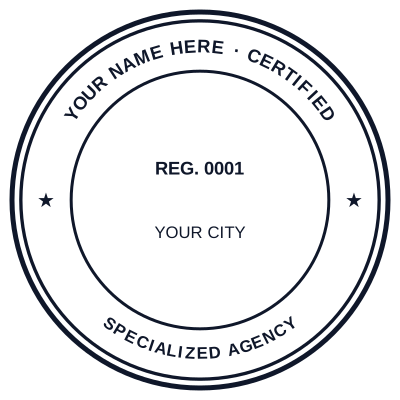
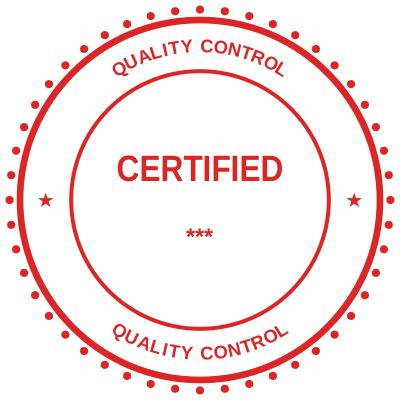
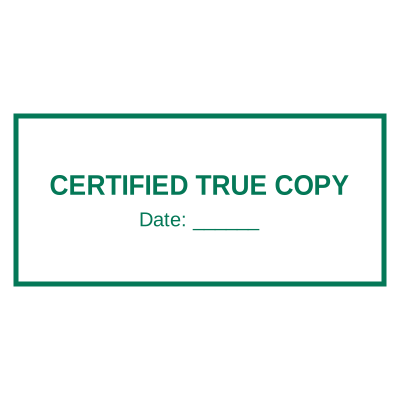
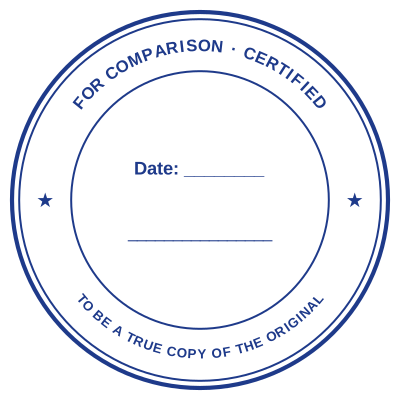
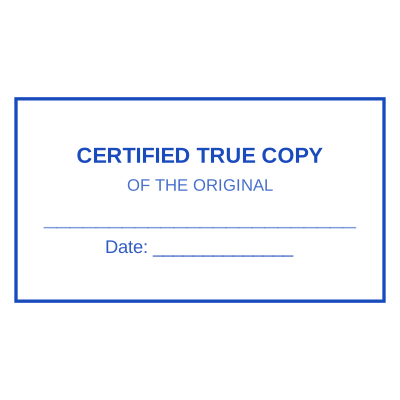
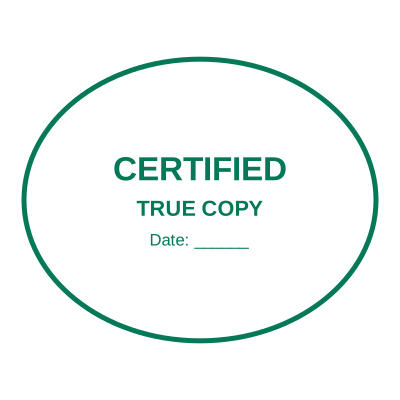
Open the stamp maker with any of these
Every preview on this page carries a faint Estamplab watermark. Your own download does not: the editor renders your stamp again, clean, as a transparent PNG, an SVG or a PDF. See the full template library.
A certified translation is only accepted if the certification on it is legible and checkable, which in practice means the translator stamp has to carry a name, a language pair and a number somebody can look up. The requirement comes from the body that accredited you and from whoever is receiving the document, and the two do not always want the same thing, which is the part no template can decide for you.
What you get
- A round or oval seal with curved ring text, which is the conventional form.
- Lines for the name, the language pair, the accreditation body and the membership number.
- A date that fills itself in on the day the translation is certified.
- A transparent PNG for placing on the translation, or apply it to the file directly.
- Non-Latin text supported, so a stamp can carry both languages of the pair.
- A serial number, where a translator keeps a numbered register of certified work.
How to make it
- Open the stamp maker and pick a shape, or start from a template.
- Type your wording, then set the colour, border and size.
- Add the date, time, serial number or logo, and position each one.
- Preview it live, then download. Designing and previewing are free.
Questions
What should a certified translator stamp say?
Your name as it appears on your accreditation, the language pair, the accrediting body, and your membership or registration number. Many bodies specify the exact wording, some require a particular shape or the words "certified translation", and some also require your signature beside the stamp rather than instead of it. Check your own body's rule before making one: the layout is the easy part and the wording is the part that gets a translation rejected.
Is a digital translator stamp accepted?
It depends on the receiving authority rather than on us, and the split is real: many courts, universities and immigration authorities accept a digitally certified translation, and others still insist on a wet stamp and an ink signature on paper. Ask the body the translation is going to, because a rejected certified translation usually means the whole job again.
Can the stamp carry both languages?
Yes. Non-Latin scripts are supported, so a stamp can carry your details in the target language as well as the source, which is often what the receiving side actually wants to read. Watch the size: two languages on a 40mm seal gets small quickly, and an oval gives you more width for the same height.
Do I need a different stamp for sworn translation?
Possibly, and this varies by country more than almost anything else in this area. Sworn translators in several civil law jurisdictions are appointed by a court and given specific requirements for the seal, including its wording and sometimes its dimensions. If you are sworn rather than accredited, work from your appointing court's specification.
Can I only make a stamp for accreditation I hold?
That is the rule, and it is not a formality. A certified translator stamp asserts a qualification, so producing one naming a body you are not accredited by, or a number that is not yours, is a misrepresentation whatever tool drew it.
Estamplab is a design tool. This page describes common commercial practice rather than giving legal, tax or financial advice, and practice changes. Where a specific document matters, check the requirement with the body receiving it. Only produce a mark your own organisation or your own credentials are entitled to use.