Self inking stamp alternative, without the block
A self inking stamp alternative is a digital stamp carrying the same wording and layout, applied to the file instead of pressed onto paper. It has no pad to re-ink, no bands to turn and no die to re-cut when the wording changes.
Self inking stamp alternative, without the block templates, ready to edit
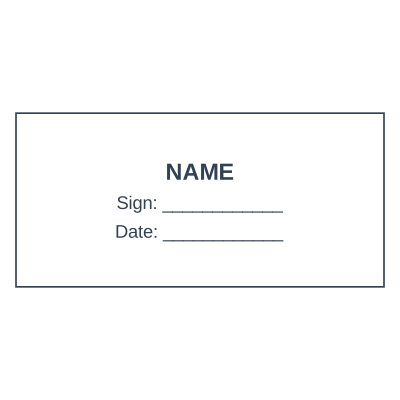
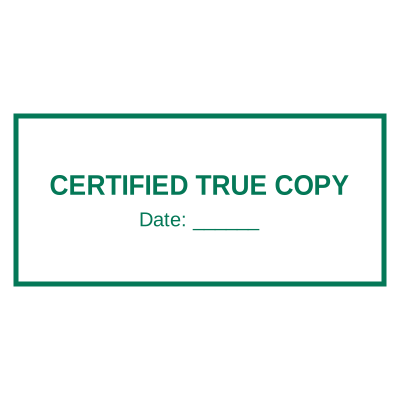

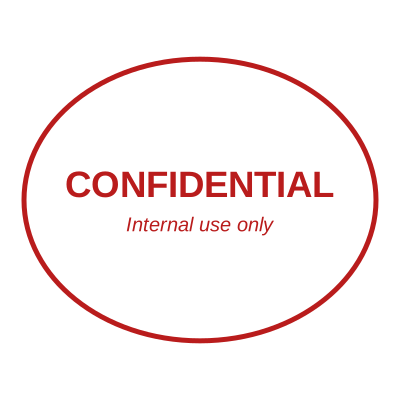
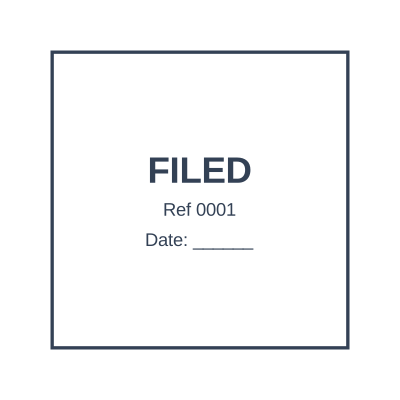
Open the stamp maker with any of these
Every preview on this page carries a faint Estamplab watermark. Your own download does not: the editor renders your stamp again, clean, as a transparent PNG, an SVG or a PDF. See the full template library.
A self-inking stamp is three moving parts pretending to be one object: a rubber die, a pad it flips onto between impressions, and on the dated versions a set of rubber bands somebody has to turn. Each of those parts is the reason for a specific complaint, and each of them has a direct equivalent here. This page goes through them one at a time, because "go digital" is not an argument and "here is what happens to the pad" is.
What you get
- The pad: nothing to re-ink, and no impression that goes faint halfway through a stack.
- The bands: the date is written when the stamp is used, so it cannot be left reading yesterday.
- The die: the wording stays editable, so a change is a change rather than a re-order.
- The impression: consistent every time, with an aging control if you want it to look pressed rather than printed.
- The size: files are tagged at the size of a real block, about 2.2 inches across for a round seal, so they land at that size in Word.
- What it is not: a physical stamp. If your work is paper in hand, buy the block and use this for the files.
How to make it
- Open the stamp maker and pick a shape, or start from a template.
- Type your wording, then set the colour, border and size.
- Add the date, time, serial number or logo, and position each one.
- Preview it live, then download. Designing and previewing are free.
Questions
Is a self ink stamp the same as a self-inking stamp?
Yes, spelled two ways. Both mean a body with the ink pad built in, where the die swings onto the pad between impressions and re-inks itself. Some people also write self inking seal, which is usually the same object with a round layout rather than a rectangular one. A pre-inked stamp is a different mechanism: the ink lives inside the die itself, which gives a sharper impression and far more impressions per refill, at a higher price.
What replaces the ink pad?
Nothing needs to. The commonest self-inking failure is a pad that has gone dry at one end, so the impression is solid on the left and ghosted on the right, and the second commonest is a pad re-inked with an ink it was not made for, which then smudges on everything. A file has one appearance and produces it every time.
What replaces the date bands?
A date that is stored as an instruction rather than drawn as a picture. Leave the date field empty and it resolves at the moment you download, so the impression carries the real date. The bands on a physical dated stamp have to be turned by hand every morning, and the morning nobody remembers is the morning a hundred documents get stamped with yesterday, which on a received stamp is a record that says the wrong thing.
What replaces the die?
The wording itself, kept editable. A die is cut once from the artwork supplied, so changing a line means ordering another block and waiting for it. Here the same saved stamp is edited in place, which matters most for the details that change without warning: a phone number, a registration number, an office address, the name of whoever signs.
Can I match the size of the stamp I already have?
Yes, and it is worth doing if the two will appear on the same paperwork. Measure the existing impression across its widest point and set the same figure here. A round company seal is usually 38mm to 42mm, and a rectangular details stamp is commonly around 58mm by 22mm, but yours is whatever it is.
Should I keep my self-inking stamp as well?
If anything you handle is paper somebody hands you, yes. The two are not really competing: a block is for the counter and a file is for the files, and plenty of offices need both. What is worth stopping is the middle case, printing a document purely so a block can be pressed on it and it can be scanned back in.
Estamplab is a design tool. This page describes common commercial practice rather than giving legal, tax or financial advice, and practice changes. Where a specific document matters, check the requirement with the body receiving it. Only produce a mark your own organisation or your own credentials are entitled to use.
Related
- Rubber stamp alternative, for documents that stay files
- Wet ink stamp: what it means and when you need one
- Custom stamps: what to order, and when you do not need to
- Date stamp generator with a date that fills itself in
- Transparent stamp PNG, no white box behind the seal
- Realistic rubber stamp generator with an aging control