Company seal maker, free to design
A company seal, also called a common seal, is the formal mark a company uses to execute documents such as deeds and share certificates, and it carries the registered company name and usually the registration number around a round or embossed rim.
Company seal maker, free to design templates, ready to edit
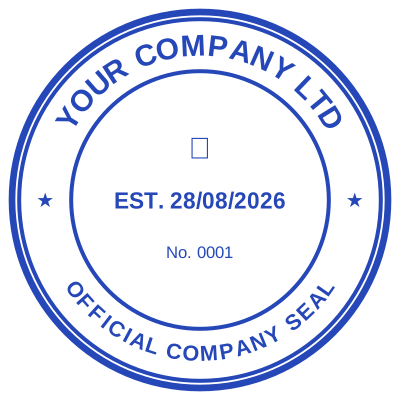


Open the stamp maker with any of these
Every preview on this page carries a faint Estamplab watermark. Your own download does not: the editor renders your stamp again, clean, as a transparent PNG, an SVG or a PDF. See the full template library.
A company seal is not simply a bigger company stamp. It belongs to the formal end of corporate paperwork: deeds, share certificates, powers of attorney, and anything a registry or a counterparty expects to be executed rather than merely signed. In many common law countries the common seal stopped being compulsory decades ago, and companies kept using one anyway because banks, registries and overseas counterparties still ask. Elsewhere it remains the normal way a company binds itself. Either way the wording is conservative and the rules about who may apply it usually sit in the articles.
What you get
- A round seal with the registered name curving around the rim, which is the conventional layout for a common seal.
- The company registration number and the place of incorporation on the second arc, where a registry expects to find them.
- An embossed finish, so the seal reads as pressed into the page the way an embosser leaves it, rather than printed onto it.
- Space in the centre for the year of incorporation, a crest or the word used by your jurisdiction, such as "Common Seal".
- Transparent output, so the seal can sit over the execution block of a deed without hiding the signature lines underneath.
- SVG and PDF alongside the image, which are the formats to hand to an engraver if you also want a physical embosser cut.
How to make it
- Open the stamp maker and pick a shape, or start from a template.
- Type your wording, then set the colour, border and size.
- Add the date, time, serial number or logo, and position each one.
- Preview it live, then download. Designing and previewing are free.
Questions
What is a company seal?
It is the formal mark of the company itself, used to execute documents rather than to label them. Historically a company could only bind itself by affixing the common seal, and although most common law jurisdictions removed that requirement, the seal survived because registries, banks and overseas parties still expect to see one on a deed or a share certificate.
Does my company need a common seal?
In most of the UK, Ireland, Australia, New Zealand and similar jurisdictions it has not been compulsory for years, and a company can execute documents by signature instead. It is still required or strongly expected in a number of other countries, and in some sectors regardless of country. This is set by your companies legislation and by your own articles, so check those rather than relying on a general answer.
What is the difference between a company seal and a company stamp?
The seal executes, the stamp labels. A seal appears on deeds and share certificates and its use is usually controlled by the articles and minuted. A stamp goes on invoices, letters and delivery notes and nobody minutes it. Most businesses need a stamp every day and a seal rarely or never.
What should a company seal say?
The registered company name, exactly as registered, is the essential part. Most seals add the registration number and the place of incorporation, and some carry the year of incorporation or the words "Common Seal" in the centre. Keep it to what your registry and your articles call for.
Can I make a digital company seal?
Yes, and that is what this produces: an image you can place on a PDF or a Word document. Whether a given registry or counterparty accepts an applied image rather than an impression on the original is their decision, so confirm it before relying on one. Only create a seal for a company you are authorised to act for; producing the seal of a company you do not represent is forgery.
Estamplab is a design tool. This page describes common commercial practice rather than giving legal, tax or financial advice, and practice changes. Where a specific document matters, check the requirement with the body receiving it. Only produce a mark your own organisation or your own credentials are entitled to use.