Sole proprietorship stamp sample and format
A sole proprietor stamp carries the trading name, the proprietor named underneath, and the business registration or permit number where one is held. It is not a company seal, because a sole proprietorship is not a company.
Sole proprietorship stamp sample and format templates, ready to edit

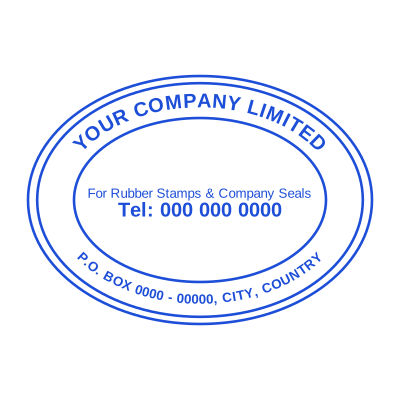



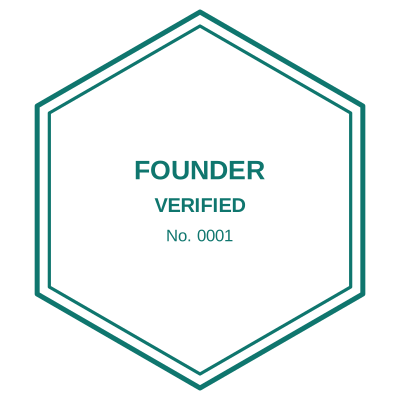
Open the stamp maker with any of these
Every preview on this page carries a faint Estamplab watermark. Your own download does not: the editor renders your stamp again, clean, as a transparent PNG, an SVG or a PDF. See the full template library.
A sole proprietorship stamp sample, and what it says
[BUSINESS OR TRADING NAME]
[Proprietor name], Proprietor
[Registration or business permit number, where one is held]
[Address, phone or email]
Date: ______________
A sole proprietorship has no separate legal identity, so the stamp usually carries the trading name with the proprietor named underneath rather than a company registration. Where the business is registered, the registration or permit number is what a bank or a client will check. The stamp is evidence of who issued a document rather than something that binds anyone, and what a specific counterparty requires is for them to say.
A sole proprietorship has no legal identity separate from the person running it, which is the fact the stamp has to reflect. There is no incorporation to point at and no company number, so a round corporate seal with a registration number in the middle is the wrong object however official it looks. What a bank or a client is checking is the trading name and that the proprietor is the person signing.
What you get
- Trading or business name, with the proprietor named underneath.
- The business permit or registration number where the business is registered.
- Address, phone or email, which on a small business stamp is often the useful part.
- Rectangular is the common form; a round seal where local practice expects one.
- A date line that fills itself in on the day.
- Free to design and preview at true size, with no account to start.
How to make it
- Open the stamp maker and pick a shape, or start from a template.
- Type your wording, then set the colour, border and size.
- Add the date, time, serial number or logo, and position each one.
- Preview it live, then download. Designing and previewing are free.
Questions
What is the format of a sole proprietor stamp?
Trading name on the first line, then the proprietor's name with the word Proprietor, then the permit or registration number if the business holds one, then contact details if there is room. Four lines is the practical limit before the text gets too small to press cleanly.
Can a sole proprietor have a company seal?
Not in the legal sense: a common seal belongs to a body corporate and a sole proprietorship is not one. You can absolutely have a round business stamp that looks like a seal, and plenty of proprietors do, but it should not claim an incorporation. Putting Ltd, Limited or Pvt Ltd on it asserts something untrue.
Does a sole proprietor need a stamp at all?
Legally, almost never. Practically it depends who you invoice: banks, government departments and larger companies frequently expect the mark on an invoice or a letter and will send it back without one. That is a matter of their practice rather than a rule, so ask the party asking.
What should go on the stamp if the business is not registered?
The trading name and your own name, and leave the number off rather than inventing a reference. A number that looks like a registration and is not one is worse than no number, because it is the line a counterparty will try to verify.
Is the stamp enough to bind me to a contract?
The stamp is evidence of who issued the document. As a sole proprietor you are personally liable on your business contracts whether or not a stamp is on them, which is worth knowing independently of the stamp: there is no company standing between you and the obligation.
Estamplab is a design tool. This page describes common commercial practice rather than giving legal, tax or financial advice, and practice changes. Where a specific document matters, check the requirement with the body receiving it. Only produce a mark your own organisation or your own credentials are entitled to use.