Blog › Digital stamps for PDF and Word
E-stamps: why company stamps went digital
12 August 2026 · Estamplab
Make your stamp free · Browse 225 templates


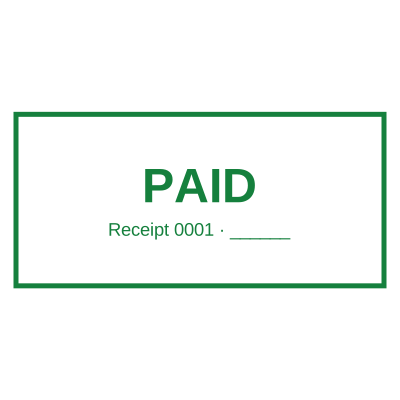



Open the stamp maker and start from any of these
The rubber stamp is a remarkably durable piece of technology. It outlasted the typewriter, the telex, the fax and the filing cabinet. Offices that have not owned a physical in-tray in fifteen years still have a stamp in a drawer.
It survived because it was never really about ink. A stamp does three jobs, and until recently paper was the only place to do them.
First, which e-stamp you mean
Two unrelated things share the name. In India and a few other markets, e-stamp or e-stamping means electronic stamp paper bought to pay stamp duty on a document, issued through an authorised system. That is a government revenue process, this site has nothing to do with it, and if that is what you are looking for you want the revenue authority rather than a design tool. There is more on that distinction on the stamp duty page.
Everywhere else, an e-stamp is what this article is about: the mark your organisation presses, held as a file and applied to a document rather than to paper.
The three jobs
It says the document came from an organisation. A signature says a person; a stamp says the company, the school, the practice. That distinction is why a signed invoice and a stamped one are treated differently by an accounts department that has never met you.
It records that something happened. Received on this date. Approved by this office. Paid. The stamp is a small piece of metadata pressed onto the thing it describes, which is why it survives being photocopied and forwarded.
It is hard to apply casually. You have to physically have it. That friction is the point: it makes the mark mean something.
What changed
Not the fax, and not the scanner. Those just moved paper around faster. What changed is that the document stopped being paper at any point in its life.
A contract is drafted in Word, sent as a PDF, signed electronically, filed in a cloud folder and read on a phone. Nobody prints it. And into that workflow the rubber stamp introduces an absurdity: to apply a mark that says "we received this", you print a document that was never on paper, press ink onto it, scan it back, and throw the paper away. The stamp is now the only reason the printer exists.
That is the actual moment stamps went digital. Not a technology arriving, but the paper leaving.
What a digital stamp does that a rubber one cannot
Most of the answer is unremarkable. It is a transparent image, it goes on a PDF, it looks like a stamp. If that were all, this would be a convenience and not much more.
Three things are genuinely different.
The date can be a variable rather than a picture. On a physical date stamp the bands are turned by hand every morning, and the morning nobody turns them is the morning a hundred documents get stamped with yesterday. A digital date can resolve at the moment the stamp is used, so the impression records the real day without anybody remembering anything.
The serial number can be unrepeatable. A rubber stamp produces the same impression forever. Two documents stamped with it are indistinguishable. A digital stamp backed by a server-side counter can issue a number that has never been issued before and never will be again, which turns an impression from decoration into a reference somebody can trace.
The wording can change without a new die. A change of registered address, a new practising number, a rebrand: on a rubber stamp each of those means a new block and a wait. On a digital one it is an edit.
What a rubber stamp still does better
Paper you are physically holding. If somebody hands you a stack of forms across a counter, a self-inking stamp is faster than any file will ever be, and nothing about going digital changes that. A busy front desk with real paper on it should buy a real stamp.
The honest position is that these are different tools for documents in different states, and most organisations now have both states. The mistake is running paper-shaped process over digital documents, which is where the print-stamp-scan loop comes from.
What it means practically
In practice it means the mark travels with the document rather than with the office. A digital stamp for documents is applied where the file already is, which is a browser, and Estamplab is built around that rather than around producing artwork for somebody else to cut.
If your documents arrive and leave as files, the stamp should be a file. If they arrive on paper and stay on paper, keep the block. If they arrive as files and leave as paper, look closely at why, because that is usually a habit rather than a requirement.
Design one free at estamplab.com, no account needed to start.
Every kind of stamp and seal
- Notary stamps and seals
- Rubber stamps
- Rubber stamp maker
- Self-inking stamps
- Office stamps
- Official stamps
- Company seals
- Corporate stamps and seals
- Company chops
- Seals for civil servants
- Justice and court stamps
- Legal and advocate stamps
- Certified true copy stamps
- Medical stamps
- Pharmacy stamps
- Veterinary stamps
- Engineer and architect seals
- Land surveyor seals
- Bank stamps
- School and principal stamps
- Teacher and marking stamps
- University and college seals
- Library stamps
- Inspection stamps
- Courier and logistics stamps
- Construction and site stamps
- Real estate stamps
- Hotel and restaurant stamps
- Church and charity seals
- Tender and bid stamps
- HR and payroll stamps
- Received and paid stamps
- Confidential and draft stamps
- Signature stamps
- Date stamps
- Custom band stamps
- Numbering stamps
- Address stamps
- Monogram stamps
- Wedding stamps
- Gift and craft stamps
- Art and logo stamps
- Wax and foil seals
- Stamp or seal, by profession