Blog › Stamp templates and design
Signature stamps, and how to use one safely
28 August 2026 · Estamplab
Make your stamp free · Browse 225 templates
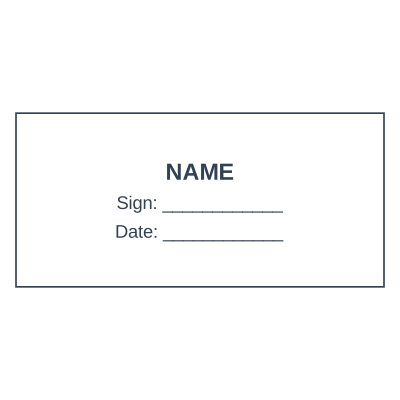


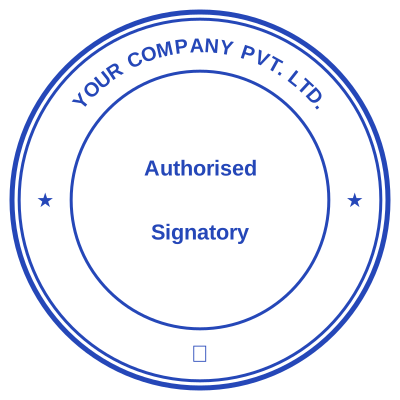
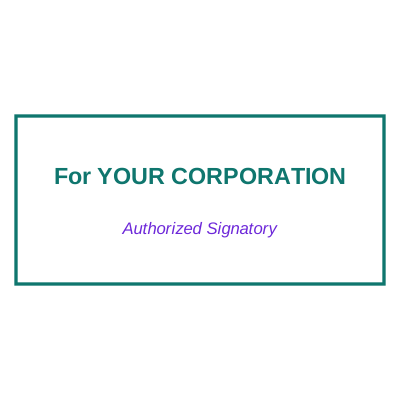
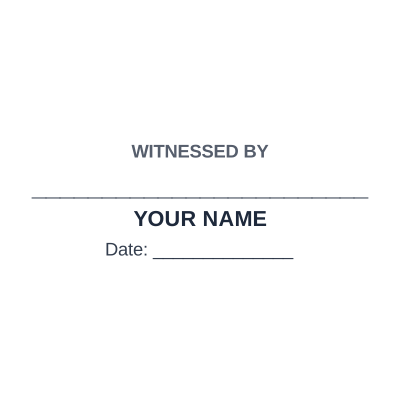
Open the stamp maker and start from any of these
A signature stamp reproduces your signature as a mark you can apply repeatedly. On a desk that signs the same routine paperwork thirty times a day, it saves genuine time. On a document that binds you to something, it creates a genuine risk. The whole subject is the line between those two, and where that line falls is more precise than most advice admits.
What a signature stamp is worth
A stamped signature is sometimes called a facsimile signature: a reproduction rather than an act. That word is the key to the whole thing.
A handwritten signature carries two pieces of information: that the signatory's hand made this mark, and that they made it on this document with intent. A stamped signature carries the first as an image and the second not at all. Anybody holding the stamp can apply it, and nothing on the page distinguishes an impression made by you from one made by somebody who reached your drawer.
That does not make it worthless. It makes it evidence of authorisation of a routine kind, which is exactly what routine paperwork needs and exactly what a contract does not.
Where it is fine
Documents where the mark is saying "yes, I have seen this and it is in order", and where the consequence of being wrong is a corrected form rather than a liability:
- Internal approvals and sign-offs.
- Delivery notes, packing slips and goods received records.
- Timesheets and expense approvals.
- Routine correspondence going out in volume.
- Compliment slips and acknowledgements.
- Marking, feedback and school paperwork, where a teacher stamp does the same job.
- Prescription pads and clinical forms in the jurisdictions that permit it, alongside the practitioner's registration number, which is the point of a doctor stamp.
Where it is not
Sign these yourself, every time:
- Contracts, deeds and guarantees.
- Cheques and payment instructions. Some organisations do use facsimile signature plates on cheque runs, under strict dual control, and that is a controlled banking arrangement rather than a stamp in a drawer.
- Anything creating or transferring an interest in property.
- Statutory declarations, affidavits and anything sworn.
- Court filings.
- Board resolutions and anything executed on behalf of a company.
- Anything a regulator, a bank or a counterparty has said must be wet-signed. Their policy governs regardless of what the law permits.
The general principle: if the document creates an obligation, sign it. If it records a routine event, a stamp is defensible.
Making one from your own signature
- Sign on plain white paper with a dark pen. Black or dark blue, and a pen with a firm line rather than a fine gel that will thin out when scanned.
- Photograph it square-on in even light, or scan it. A phone photograph is fine if the paper fills the frame and there is no shadow across it.
- Upload it in the stamp maker. The background is knocked out automatically, so the signature lands as ink rather than as a white rectangle sitting on the document. That knock-out is the step people skip, and it is why so many stamped signatures arrive inside a visible white box.
- Add a name and title line underneath. This is the single change that makes a signature stamp better than a bare signature image, because a reader can tell who signed as well as that somebody did.
- Add a date line if the document is a record rather than a courtesy. A signature and date stamp puts both in one mark, and the date stays editable.
- Download the PNG that leaves the signature underneath visible for documents, or take the SVG to a stamp maker if you also want a physical one.
There is a fuller walkthrough on the signature stamp page, and templates set up with the name and title block already in place:
The controls that make it safe
A signature stamp is a delegation of authority whether or not anybody described it that way. Three controls turn it into a managed one.
Limit what it is used for, in writing. A one-line internal note saying which document types the stamp may be applied to is enough, and it is the difference between a control and an assumption.
Control who holds it. A physical stamp in an unlocked drawer is available to everyone in the building, and this is the commonest way signature stamps go wrong. A digital one lives in an account behind a login, which is a meaningfully better answer.
Make impressions distinguishable. Add the date, and where it matters add a serial number that increments, so an approval can be tied to one document rather than being one of a thousand identical marks. That is the argument in serial numbers on stamps, and it applies to signature stamps more than to any other kind.
The related marks
A signature stamp rarely travels alone. It sits beside a date line, a company mark, and often a deposit stamp or a received stamp on the same page, because a document that needs a signature usually needs to record when it arrived and what happened to it next.
A signature rarely stands alone on a business document, and the marks around it each do a distinct job.
- An authorised signatory stamp names the capacity in which somebody is signing, which is what makes a signature bind a company rather than a person.
- A witness stamp identifies the person who watched the signature being made.
- A company stamp beside the signature identifies the organisation. The pairing of the two is covered in the signature and company stamp guide.
- An attestation stamp records that a named person confirmed something about the document.
Worth saying plainly: this is a design tool and describes common commercial practice, not advice on what any specific document requires. Banks, registries and counterparties each set their own requirements and they differ between countries, so check with whoever will receive the document. And only make a mark for a business you are entitled to represent, because a stamp in another organisation's name is forgery whatever it was made with.
Common questions
Is a signature stamp legal?
Using one is legal. Whether a stamped signature satisfies a given requirement is a different question, and it turns on the document and the jurisdiction. Routine commercial paperwork rarely prescribes anything. Deeds, sworn documents and property instruments usually do. What settles it in practice is often the recipient's policy rather than the law.
Can I use a signature stamp on a contract?
Sign contracts yourself. The point of a signature on a contract is intent to be bound at that moment, and a stamp cannot evidence that.
How do I get my signature as a transparent PNG?
Sign on white paper, photograph or scan it, and upload it here. The white is knocked out and you get a PNG with a real alpha channel, which sits on a document as ink rather than as a white card. Doing it any other way, including screenshotting it, produces the white box.
Can I put a signature stamp in a Word document?
Yes. Insert the transparent PNG as a picture and set the wrap so text flows around or behind it. The steps are on insert a stamp in Word, and it works in Word on a phone as well as on a desktop.
Should the signature stamp include my name in text?
Yes. A signature is often unreadable by design, and a name and title line beneath it is what tells the reader who signed. It costs nothing and it is the most useful thing on the mark.
Is a stamped signature the same as an electronic signature?
No. A stamped signature is an image. An electronic signature under a statute such as ESIGN or eIDAS is a record of intent, and at the higher tiers it is cryptographically bound to the document so that later alteration is detectable. Are digital stamps legal sets out the difference.
Read next: the four stamps every small business needs, and how to spot a fake stamp.
Every kind of stamp and seal
- Notary stamps and seals
- Rubber stamps
- Rubber stamp maker
- Self-inking stamps
- Office stamps
- Official stamps
- Company seals
- Corporate stamps and seals
- Company chops
- Seals for civil servants
- Justice and court stamps
- Legal and advocate stamps
- Certified true copy stamps
- Medical stamps
- Pharmacy stamps
- Veterinary stamps
- Engineer and architect seals
- Land surveyor seals
- Bank stamps
- School and principal stamps
- Teacher and marking stamps
- University and college seals
- Library stamps
- Inspection stamps
- Courier and logistics stamps
- Construction and site stamps
- Real estate stamps
- Hotel and restaurant stamps
- Church and charity seals
- Tender and bid stamps
- HR and payroll stamps
- Received and paid stamps
- Confidential and draft stamps
- Date stamps
- Custom band stamps
- Numbering stamps
- Address stamps
- Monogram stamps
- Wedding stamps
- Gift and craft stamps
- Art and logo stamps
- Wax and foil seals
- Stamp or seal, by profession