Blog › Stamp templates and design
Library stamps: ownership, accession and the date due
3 September 2026 · Estamplab
Make your stamp free · Browse 225 templates

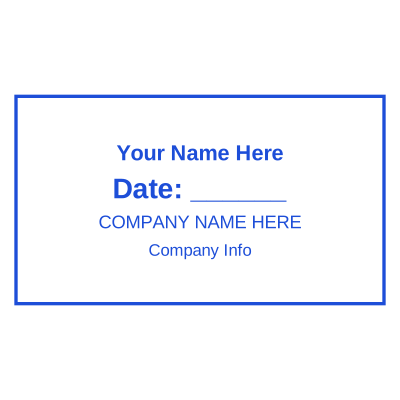
Open the stamp maker and start from any of these
A library stamp is one of the few marks whose job has not changed in two hundred years: this book belongs here, this is its number, and this is when it is due back. Three marks, three jobs.
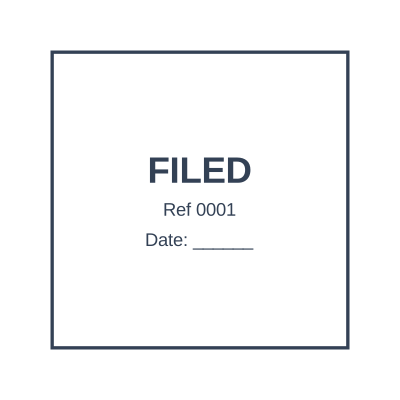
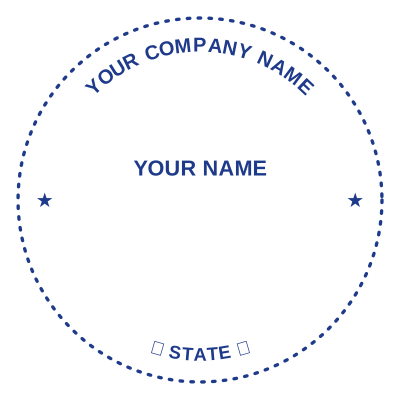
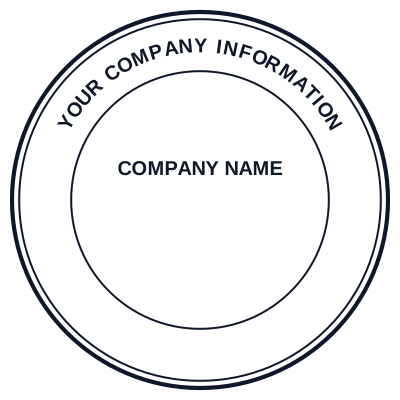
Open the stamp maker and start from any of these
The ownership mark
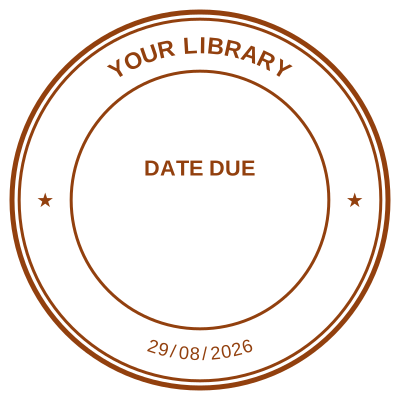
The one on the title page and the fore edge. It carries the library's name and usually its town or parent institution, and nothing else. It is deliberately plain, because it goes on hundreds of pages and a busy design in a book is vandalism.
Traditionally round, which is why the phrase is library seal as often as library stamp. See the library seal and the library stamp.
The accession mark
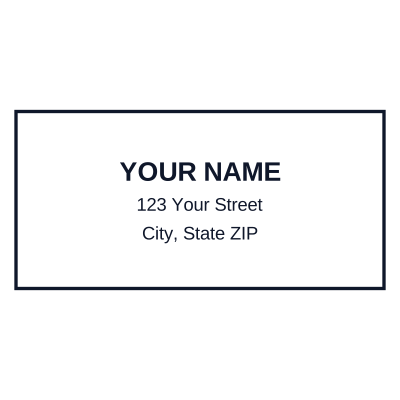
The one that does the work. A frame with a space for the accession number, sometimes the date acquired and the class mark:
ACCESSION No. .............. Class .............. Date ..............
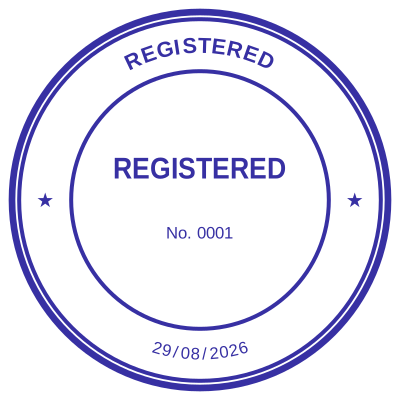
The accession number is the book's identity in your catalogue. It has to be unique and it has to never repeat, which is exactly the guarantee a hand-turned numbering stamp cannot give: advance it twice and you have skipped a number, forget and you have issued one twice. The sequential number stamp generator issues each one once.
The date mark
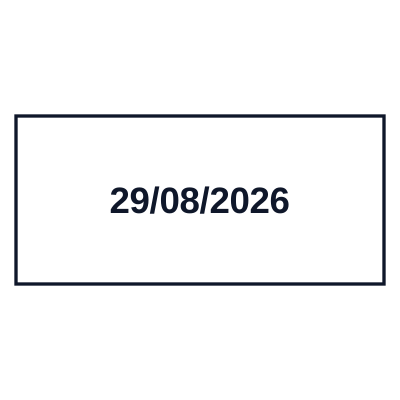
Date due, date received, date returned. A dial dater set by hand every morning, and the classic source of a whole day of books stamped with yesterday. See why the date is nearly always wrong and the band stamps behind it.
The personal version
An ex libris mark is the same idea for a private collection: a name, sometimes a monogram or a device, and no accession number because nobody is running a catalogue. It is closer to a monogram stamp than to a library mark. See the ex libris stamp.
Ink, and the one rule
Use an ink that will not migrate through the paper over decades. This is the single piece of advice conservators give about library stamps and the one most often ignored: a cheap dye pad on thin book paper will show through on the reverse within years and keep spreading.
Keep the mark small, keep it off the text block where you can, and never stamp across an illustration. A mark on the title page verso and on one fore edge is the convention for a reason.
Read more: What survives at stamp size, and what fills in
The digital half
Acquisition paperwork, interlibrary loan forms and invoices are files. A received stamp applied to the PDF handles those without printing anything, and it keeps the date honest.
The honest limits
Estamplab is a design tool. This page describes common practice rather than giving legal or archival advice, and conservation practice differs by collection, so check the requirement with your own institution before marking anything rare.
Only produce a mark your library or institution is entitled to use.
The rest of the range is on the stamp and seal directory.
Every kind of stamp and seal
- Notary stamps and seals
- Rubber stamps
- Rubber stamp maker
- Self-inking stamps
- Office stamps
- Official stamps
- Company seals
- Corporate stamps and seals
- Company chops
- Seals for civil servants
- Justice and court stamps
- Legal and advocate stamps
- Certified true copy stamps
- Medical stamps
- Pharmacy stamps
- Veterinary stamps
- Engineer and architect seals
- Land surveyor seals
- Bank stamps
- School and principal stamps
- Teacher and marking stamps
- University and college seals
- Inspection stamps
- Courier and logistics stamps
- Construction and site stamps
- Real estate stamps
- Hotel and restaurant stamps
- Church and charity seals
- Tender and bid stamps
- HR and payroll stamps
- Received and paid stamps
- Confidential and draft stamps
- Signature stamps
- Date stamps
- Custom band stamps
- Numbering stamps
- Address stamps
- Monogram stamps
- Wedding stamps
- Gift and craft stamps
- Art and logo stamps
- Wax and foil seals
- Stamp or seal, by profession