Blog › Stamp templates and design
Stamp sizes and shapes, and which to use when
28 August 2026 · Estamplab
Make your stamp free · Browse 225 templates

Open the stamp maker and start from any of these
Shape is the first decision in a stamp design and the one people spend the least time on. It is worth more thought than it gets, because each shape carries a convention about what kind of mark it is, and each one holds a different amount of text before the impression stops being readable.
The standard sizes
Size is the decision people skip and then regret, because a stamp is judged at the size it is used, not at the size it is designed. Work in real millimetres from the start: a round stamp maker, an oval stamp maker and a rectangular stamp maker are the same tool with a different layout, and the shape you pick changes what will fit far more than it changes how the thing looks.
Physical stamps cluster around a small set of sizes, and those sizes are worth designing to whether or not you ever cut a die, because they are the sizes a reader's eye is calibrated to.
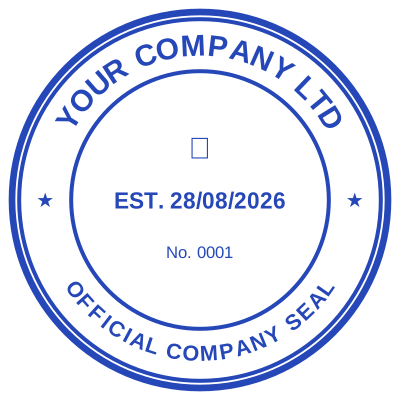
- Round: 38mm and 40mm are the workhorses, with 30mm for a compact mark and 45mm to 50mm where a seal needs to carry a lot. A 38mm circle comfortably holds a ring of text around the edge, a second inner ring, and two or three short lines in the middle.
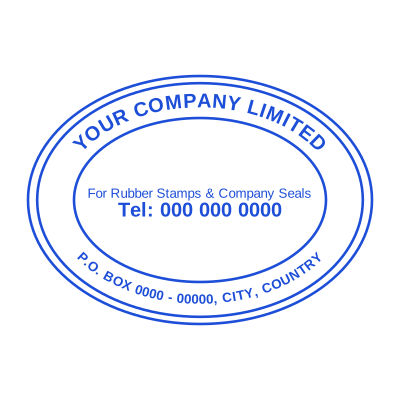
- Oval: commonly 45mm by 30mm, or 47mm by 18mm for a flatter mark. An oval holds more text than a circle of the same height because it is wider, which is why professional and banking marks favour it.
- Rectangular: around 55mm by 20mm, or 56mm by 20mm, up to about 70mm by 30mm. Four to five stacked lines. The most text per square millimetre of any shape.
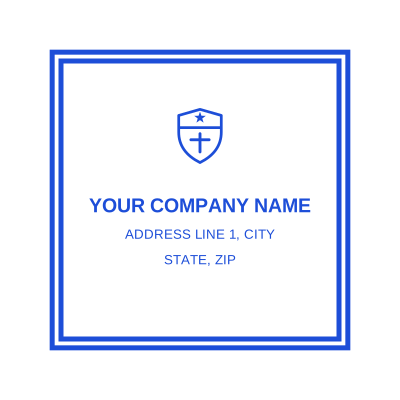
- Square: 30mm to 40mm a side. Two to four lines, or a logo with a line under it.
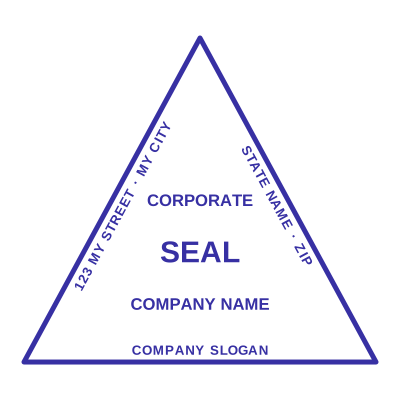
- Triangular: typically 40mm to 45mm on a side. Very little text, which is the point.
The company stamp size guide goes through what fits in each in more detail.
Round
The default for anything formal. A round stamp reads as a seal, and the ring of text around the edge is the single most recognisable convention in stamping: organisation name curving around the top, town or jurisdiction curving along the bottom, and the core information in the middle.
Use it for a company seal, a common seal, a professional seal, a notarial mark, a government or institutional mark. Almost every corporate seal you have seen is round.
The trap is the ring. Curved text is harder to read than straight text, so a ring stuffed with a long name in small type is a mark nobody reads. Keep the ring to the name and the location, and put the detail in the middle where it sits flat.
Make one: round stamp maker.
Oval
The professional compromise. An oval stamp keeps the sealed, formal feel of a circle while giving you more width for text, which is why it is so common on accountancy, legal, banking and inspection marks.
It also fits better in a margin than a circle of the same text capacity, because it is wider than it is tall and margins are wider than they are tall.
Rectangular
The practical shape, and the one most under-used. A rectangle stamp holds straight, flat, stacked lines, which is the most readable arrangement of text there is. Nothing curves, nothing is squeezed.
Use it wherever the information matters more than the ceremony: an address stamp, a signature stamp block, a bank endorsement, an inspection record, a received mark with fields to fill in, a notarial mark in the jurisdictions that use the rectangular form.
It is also the shape that sits most comfortably beside a signature without covering anything.
Make one: rectangle stamp maker.
Square
A plain text stamp, with no emblem and no ring, is the most ordered shape in any office, and a circle stamp is the most ordered seal. A square seal is the standard company mark across much of East Asia, where the Japanese kakuin and the square company chop are square by convention rather than by preference. In the west it reads as modern and slightly technical, which suits a technology company better than it suits a law firm. A square stamp maker and a round one are the same tool: what changes is that a square has no ring, so the name goes in lines rather than curved, and the corners give you more usable area than a circle of the same width.
Between the two. A square seal reads as more designed than a rectangle and less ceremonial than a circle, and it is the natural frame for a logo with a line of text beneath it.
Common on design, technology and creative businesses, and on East Asian company marks, where the company chop is conventionally square and red. The China company chop page covers that convention specifically.
Make one: square stamp maker.
Triangular
The specialist. A triangle stamp holds very little text, which is exactly why it is used for marks that must be recognised instantly rather than read: quality control, inspection passes, hazard and caution marks, and certain institutional stamps in Eastern European and Central Asian practice.
If you are choosing a triangle because it looks distinctive, count your words first. Three short lines is the realistic ceiling.
Other shapes
- Hexagonal and octagonal marks appear on inspection and quality work, and read as more technical than a circle. There is a hexagon stamp page.
- Starburst and scalloped edges appear on award, guarantee and anniversary seals, where the point is decorative.
- Free shapes built around a logo, where the mark is the logo with a border rather than a shape with a logo in it. Turning a logo into a stamp covers the practical side of that.
How to choose
Three questions settle it almost every time.
How much text is there? Count the lines. One or two, any shape works. Three to four, go rectangular or oval. Five or more, rectangular, and consider whether you need all five.
Is the mark formal or functional? A document being executed or certified wants a circle or an oval. A document being processed, logged or addressed wants a rectangle.
Where does it go on the page? A mark that has to sit in a margin or under a signature line wants to be wide and short. A mark that goes across a corner or into open space can be round.
Two things this page is not. It is a description of what these marks are and how they are laid out, not advice on when one is legally required: that is set by the body receiving the document and it differs by country. And a design tool makes the mark, not the standing behind it, so only ever produce a stamp you are entitled to use.
Common questions
What size should a company stamp be?
38mm or 40mm for a round one, around 55mm by 20mm for a rectangular one. Those are the sizes readers are used to, and they are large enough for a registration number to stay legible.
Does the shape of a stamp have legal meaning?
Almost never in itself. A few jurisdictions prescribe a shape for particular official or notarial marks, and where they do, that governs. Otherwise shape is convention, and convention still matters because it sets expectations.
Can a stamp be any shape?
Physically, yes, a die can be cut to any outline. Digitally, there is no constraint at all. Whether an unusual shape helps you is a different question: a mark that does not look like a mark does not get read as one.
What is the most common stamp shape?
Round, by a wide margin, for identity and seal marks. Rectangular is more common for functional, high-volume marks like addresses and received stamps.
How big should the text on a stamp be?
Large enough to read at actual size, which is smaller than it looks on screen. Preview at 100 per cent before downloading, and pay particular attention to registration and licence numbers, which are the lines people set smallest and need most.
Read next: the types of stamp an office needs, and how rubber stamps are actually made.
Every kind of stamp and seal
- Notary stamps and seals
- Rubber stamps
- Rubber stamp maker
- Self-inking stamps
- Office stamps
- Official stamps
- Company seals
- Corporate stamps and seals
- Company chops
- Seals for civil servants
- Justice and court stamps
- Legal and advocate stamps
- Certified true copy stamps
- Medical stamps
- Pharmacy stamps
- Veterinary stamps
- Engineer and architect seals
- Land surveyor seals
- Bank stamps
- School and principal stamps
- Teacher and marking stamps
- University and college seals
- Library stamps
- Inspection stamps
- Courier and logistics stamps
- Construction and site stamps
- Real estate stamps
- Hotel and restaurant stamps
- Church and charity seals
- Tender and bid stamps
- HR and payroll stamps
- Received and paid stamps
- Confidential and draft stamps
- Signature stamps
- Date stamps
- Custom band stamps
- Numbering stamps
- Address stamps
- Monogram stamps
- Wedding stamps
- Gift and craft stamps
- Art and logo stamps
- Wax and foil seals
- Stamp or seal, by profession