Blog › Stamp templates and design
Types of stamps: the full set, explained
28 August 2026 · Estamplab
Make your stamp free · Browse 225 templates
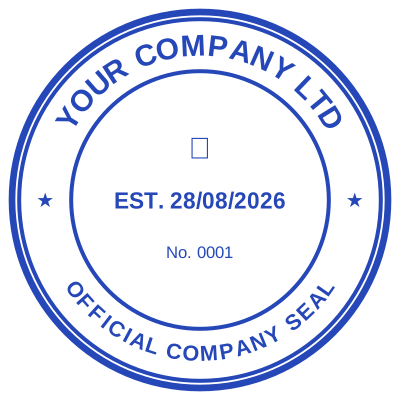

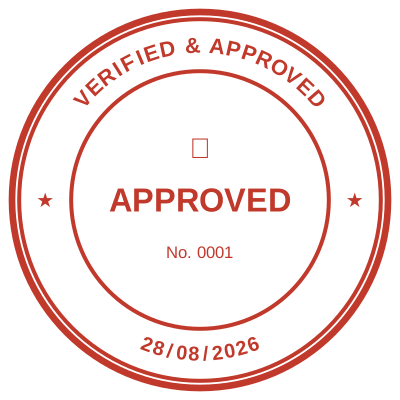
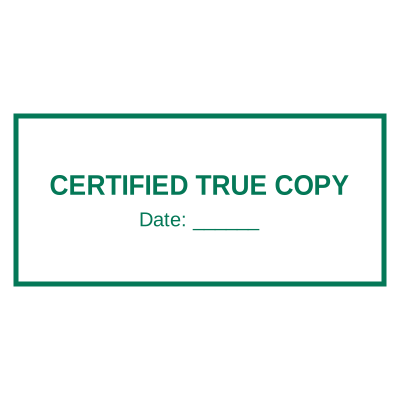

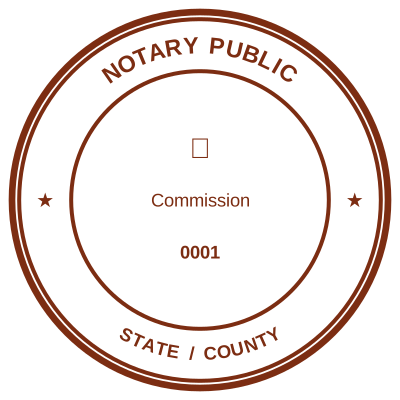
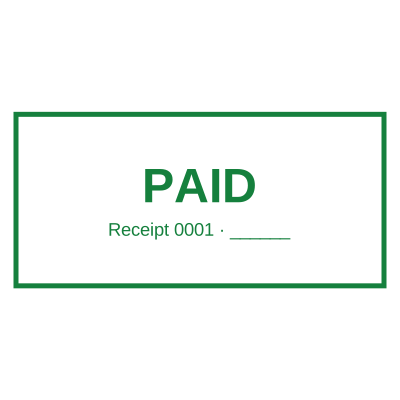
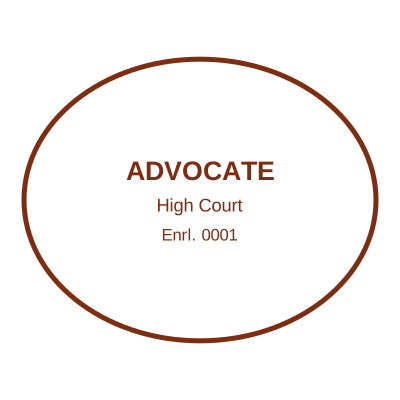
Open the stamp maker and start from any of these
Most offices own three or four stamps and could not tell you why they own those three or four. They were inherited, or somebody ordered them when the business started. This is the full set worth knowing, sorted by what the mark is actually doing, so you can work out which ones your desk is missing and which one you have been using wrongly.
1. Identity marks: who this came from
These say the document came from a particular organisation or person. They are the ones with a name on them, and they change rarely.
The company stamp carries the registered name, usually the registration number and often the town. The common seal is the more formal version, conventionally round, used where a document is being executed rather than just marked. Whether one is still legally required is a separate question, and mostly the answer is no: we covered that in is a company seal still required.
A logo stamp puts the mark itself on the page. If you have a logo file already, turning it into a stamp knocks the white background out so it prints as ink rather than as a white card.
A name stamp and an address stamp do the dull, high-volume work: signing off internal paperwork, putting a return address on envelopes.
2. Status marks: what state this document is in
Single words, usually large, usually across the page. The whole job is that somebody can tell from across a desk what they are holding.
DRAFT and CONFIDENTIAL are the two that prevent real accidents, a draft signed as though final, a document circulated that should not have been. COPY and ORIGINAL matter wherever both exist and somebody has to know which is which. VOID and CANCELLED take a document out of circulation. URGENT and EXPIRED are about time rather than status, but they behave the same way.
These want a rectangle or a plain band, not a seal. Legibility is the entire specification.
3. Process marks: what has happened to it
The busiest category, and the one where the date matters most.
RECEIVED is the one that ends up in disputes, because when a document arrived is frequently the whole argument. PAID, APPROVED, CHECKED and REJECTED record a decision and usually want a signature line and a date under them. GOODS RECEIVED and SHIPPED do the same at a warehouse door.
Every one of these is better with a date, and a date stamp that fills itself in beats a rotating date band that somebody has to remember to turn each morning. The morning nobody turns it is the morning a hundred documents get yesterday, which is the subject of why your date stamp shows the wrong date.
4. Attestation marks: somebody is vouching for this
These carry professional responsibility, which is what separates them from everything above.
CERTIFIED TRUE COPY says a person compared the copy to the original. A notary stamp or commissioner for oaths stamp mark, a witness stamp, an attestation stamp: each records that somebody with standing to do so has checked something and is answerable for it.
Professional seals belong here too, and each has its own conventions: lawyer stamp, advocate stamp, doctor stamp, engineer stamp, architect stamp, land surveyor stamp, accountant stamp. The wording varies by profession and by regulator; the registration number is the line that carries the weight.
The shapes, and what they suit
Shape is a legibility decision more than an aesthetic one.
A round seal gives you two arcs of ring text, which is why it suits a name plus a qualifier and why it reads as formal. A rectangle stamp holds three or four straight lines and is faster to read, which is what an office stamp needs. A square seal suits a compact mark with a logo in the middle. A hexagon stamp or a shield seal reads as official and is common on government and institutional marks.
On any round design the ring text curves and re-fits itself as you edit, so a longer company name does not mean starting again.
Read more: The four stamps every small business actually needs
How many does an office actually need
Most need four: an identity mark, a received stamp with a date, an approved or paid mark, and a certified true copy stamp. Everything else is specific to what you do.
The reason offices end up with three the wrong shape is that each one used to cost money and a fortnight, so you ordered what you could justify and lived with it. When a stamp is a file, the calculation changes: you make the four you need, and add a fifth the week you discover you need it.
Design any of them free, with no account, and see the finished mark at full size before paying: open the stamp maker.
Read next: how to make a digital stamp, and what a rubber stamp actually costs once the reorders are counted.
A closing note. This page describes what these marks are for, not when one is legally required, which is set by the body receiving the document and differs by country. A design tool makes the mark and not the standing behind it, so only produce a stamp you are entitled to use: one in another organisation's name is forgery.
Every kind of stamp and seal
- Notary stamps and seals
- Rubber stamps
- Rubber stamp maker
- Self-inking stamps
- Office stamps
- Official stamps
- Company seals
- Corporate stamps and seals
- Company chops
- Seals for civil servants
- Justice and court stamps
- Legal and advocate stamps
- Certified true copy stamps
- Medical stamps
- Pharmacy stamps
- Veterinary stamps
- Engineer and architect seals
- Land surveyor seals
- Bank stamps
- School and principal stamps
- Teacher and marking stamps
- University and college seals
- Library stamps
- Inspection stamps
- Courier and logistics stamps
- Construction and site stamps
- Real estate stamps
- Hotel and restaurant stamps
- Church and charity seals
- Tender and bid stamps
- HR and payroll stamps
- Received and paid stamps
- Confidential and draft stamps
- Signature stamps
- Date stamps
- Custom band stamps
- Numbering stamps
- Address stamps
- Monogram stamps
- Wedding stamps
- Gift and craft stamps
- Art and logo stamps
- Wax and foil seals
- Stamp or seal, by profession