Blog › Stamp templates and design
Ordering a custom embosser: the five things to specify
4 September 2026 · Estamplab
Make your stamp free · Browse 225 templates
An embosser is a die and a counter-die in a frame that squeezes the paper. Ordering one asks five questions, and the answers matter more than the design does, because an embosser you cannot reach the right part of the page with is an embosser that stays in the drawer.

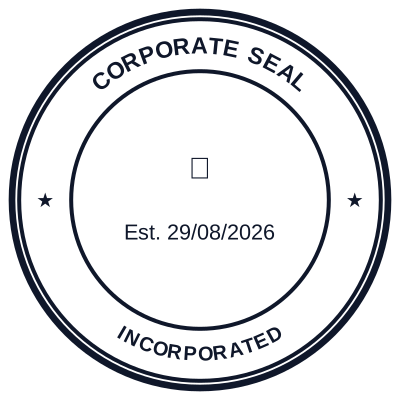




Open the stamp maker and start from any of these
Whether you want one at all is a different question, covered in embossed seals and inked stamps.
1. Embosser plate size
The diameter of the impression. Common sizes are around 1.625 inches for a notary or personal seal and 2 inches for a corporate seal, though what is standard differs by market.
Bigger is not better. An embosser only presses cleanly if the whole plate meets the paper, so a large plate needs more hand force and fails more often at the edges. Pick the smallest size your wording fits legibly, which for a company name and a registration number is usually the 2 inch plate.
If a board or a statute specifies the diameter, that specification wins.
2. Embosser frame type
This is the choice people get wrong.
Pocket or handheld. Small, squeezes like a pair of pliers, fits in a bag. Fine for occasional use and hard work for a stack.
Desk. A lever on a base. Far less effort per impression, which matters at any volume, and it does not move.
Long reach. A deeper throat, so the plate can reach further in from the edge of the page. This is the one people discover they needed after the seal arrives: a standard frame reaches about 1.5 inches from the paper edge, and if the seal block on your certificate sits in the middle of the page, a standard frame physically cannot get there.
Measure where the seal has to land on the document before you order.
3. Embosser orientation
Whether the frame presses from the left or the bottom of the page, and whether the impression reads correctly from the front or the back.
The convention for most business use is an impression that reads correctly from the front of the sheet. Some certificate work wants the reverse. If you are sealing a document that gets read from one side only, check which side.
4. Artwork for the embosser die
The die is cut from your artwork, so a vector is what the maker wants: an SVG or a print-ready PDF, at the plate size, in pure black on white with no grey.
This is where designing it first pays. Set the wording here, look at it at the actual plate diameter, then download the SVG or print-ready PDF and send that. A photograph of your letterhead or a low resolution PNG makes the maker redraw it, and what they redraw is their interpretation rather than your design.
Embossing rules are stricter than ink, because the die pushes paper rather than laying colour:
- Heavier strokes. Fine lines do not hold a fold in paper.
- No solid fills. A large solid area flattens back out and looks like a dent.
- Nothing under about 4mm of text height on a 2 inch plate.
- One depth. An embosser has no tones, only raised and not raised.
5. Wording on a custom embosser
The same content as the inked version: the registered name exactly as registered, the registration number, and the jurisdiction or year where convention expects it. For a company seal that is set out in company seals: are they still required, and for a notary the commission usually specifies it, as covered in the notary stamp and seal guide.
Leave off anything that changes. Re-cutting a die costs more than a new rubber stamp.
Read more: The other two ways of making a mark you can feel
The one weakness to plan around
An embossed impression barely survives a photocopy and disappears in a scan, because it has no colour. If the document is going to be emailed, the embossed seal will not be visible at the other end.
The usual answer is both: emboss the paper original and put an inked or digital mark on the copy that travels. Designing the plate here gives you the digital version of the same mark for free, as a transparent PNG.
The honest limits
Estamplab is a design tool and does not make or sell embossers. This page describes common practice rather than giving legal advice, and where a seal's diameter or wording is prescribed, that is set by the authority or the statute, so check the requirement with them.
Only produce a mark you or your organisation are entitled to use.
The rest of the range is on the stamp and seal directory.
Every kind of stamp and seal
- Notary stamps and seals
- Rubber stamps
- Rubber stamp maker
- Self-inking stamps
- Office stamps
- Official stamps
- Company seals
- Corporate stamps and seals
- Company chops
- Seals for civil servants
- Justice and court stamps
- Legal and advocate stamps
- Certified true copy stamps
- Medical stamps
- Pharmacy stamps
- Veterinary stamps
- Engineer and architect seals
- Land surveyor seals
- Bank stamps
- School and principal stamps
- Teacher and marking stamps
- University and college seals
- Library stamps
- Inspection stamps
- Courier and logistics stamps
- Construction and site stamps
- Real estate stamps
- Hotel and restaurant stamps
- Church and charity seals
- Tender and bid stamps
- HR and payroll stamps
- Received and paid stamps
- Confidential and draft stamps
- Signature stamps
- Date stamps
- Custom band stamps
- Numbering stamps
- Address stamps
- Monogram stamps
- Wedding stamps
- Gift and craft stamps
- Art and logo stamps
- Wax and foil seals
- Stamp or seal, by profession