Blog › Notary and legal stamps
Electronic seals, electronic stamps and e-stamps
30 August 2026 · Estamplab
Make your stamp free · Browse 225 templates


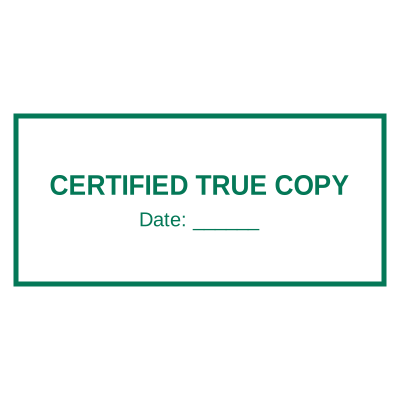


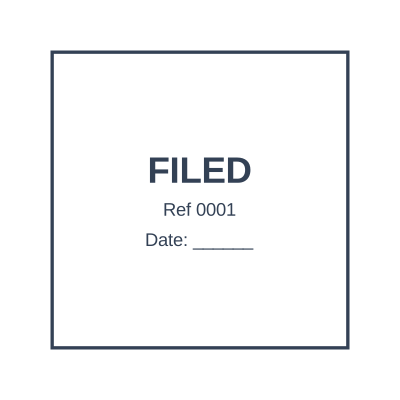
Open the stamp maker and start from any of these
Three phrases get typed into search boxes as though they meant the same thing: electronic stamp, electronic seal, and e-stamp. They do not. One is an image, one is a regulated cryptographic instrument, and one is a tax receipt in a country you may not be in. Buying or building the wrong one wastes a week, and in the third case it wastes money.
Here is what each actually is, and how to tell which one somebody is asking you for.
Electronic stamp: the image on the document
An electronic stamp, or digital stamp, is a picture of a stamp designed to be placed on a file. It carries your company name, your registration number, a date, sometimes a logo, and it sits on a PDF, a Word file or a scan exactly where a rubber stamp would have gone on paper.
It proves nothing cryptographically. What it does is what a rubber stamp does: it tells the reader which organisation the document came from, and it does it in the visual language everybody already understands. That is genuinely useful, and it is what the overwhelming majority of business documents actually need.
This is the thing Estamplab makes. Company stamp templates, the maker itself, and how to build one properly.
Electronic seal: a legal instrument, not a picture
In the European Union, electronic seal is a defined term. Under the eIDAS Regulation it means data attached to a document to guarantee the origin and integrity of that document, created by a legal person rather than an individual. A qualified electronic seal is created using a qualified certificate issued by a trust service provider on a national trusted list.
Three things follow, and they are the ones people get wrong:
- It belongs to an organisation, not a person. An electronic signature identifies a human being; an electronic seal identifies a company.
- It is not something you design. You obtain a certificate from a qualified trust service provider, following their identity checks. Nobody can draw you one.
- Its legal effect comes from the certificate, not from anything visible. A seal may have no visual representation at all. If you see a picture, that picture is decoration attached to the underlying cryptography.
So if a customer, a tax authority or an e-invoicing platform has asked you for an electronic seal, and particularly a qualified electronic seal, they are asking for a certificate from a trust service provider. We cannot issue that, and neither can any stamp design tool. What we can make is the visible mark that often sits alongside it. Background on the visual side: electronic seal templates.
The same distinction exists outside the EU under different names and different rules, so if you are being asked for one, ask the requester which standard they mean before spending anything.





Open the stamp maker and start from any of these
E-stamp: usually about stamp duty
In India and several neighbouring markets, e-stamp and e-stamping normally mean something else entirely: an electronic alternative to stamp paper, used to pay stamp duty on an agreement, a lease or a conveyance. You buy an e-stamp certificate through the authorised system and it carries a unique identification number. It is a tax receipt attached to a transaction.
That has nothing to do with a rubber stamp, a company seal, or any image on a document. If your landlord or your lawyer has asked for an e-stamp, they mean the duty certificate, and it comes from the authorised issuing channel in your state, not from a design tool.
Elsewhere in the world "e-stamp" is used loosely to mean the first item on this page, the image. When somebody uses the phrase, the fastest way to find out which they mean is to ask whether money is involved. Duty means the certificate. No duty means the picture. See also e-stamp templates.
A short way to tell which one you need
- Somebody wants to see who the document came from, on the page → electronic stamp. Build it, apply it, done.
- A platform, an e-invoicing system or a regulator is asking for a seal with a certificate → electronic seal. Go to a qualified trust service provider.
- The word "duty", "agreement", "lease" or a rupee amount appears in the request → e-stamp certificate. Go to the authorised issuing channel.
The three are complementary rather than competing. Plenty of organisations apply a visible company stamp to a document that is also cryptographically sealed, because the two do different jobs: one is for the human reading it, one is for the system verifying it.
Where the visible mark still earns its place
It is tempting to conclude that only the cryptography matters. In practice the picture keeps doing work, for a reason that has nothing to do with law:
- Most documents in most businesses are never verified by a machine. They are read by a person, who wants to know at a glance whose paper this is.
- A dated RECEIVED mark settles arguments about deadlines without anybody opening a signature panel. See received stamps.
- PAID stops the same invoice being settled twice. See paid stamps.
- CERTIFIED TRUE COPY separates the original from what is circulating. See certified true copy.
None of those need a certificate. All of them need to be legible, dated, and consistent across your team, which is exactly what a shared digital stamp gives you and a single rubber stamp on one desk does not.
Frequently asked questions
Is an electronic stamp the same as an electronic seal?
No. An electronic stamp is an image placed on a document. An electronic seal, in the EU sense, is a cryptographic instrument created with a qualified certificate issued to a legal person by a trust service provider. The first is about what the reader sees; the second is about what a verifier can prove.
Can Estamplab issue a qualified electronic seal?
No, and no design tool can. Qualified certificates come from qualified trust service providers, after identity verification, and they appear on national trusted lists. We make the visible mark, which is a different thing and often used alongside a seal rather than instead of one.
Does an electronic stamp have any legal weight?
It carries the weight that the receiving party gives it, which in ordinary commercial dealings is often considerable and in regulated matters is decided by the relevant authority. The stamp is evidence of origin in the same everyday sense a rubber stamp is, not a cryptographic guarantee. What the law actually says covers this in more depth.
What does e-stamping mean in India?
It normally refers to paying stamp duty electronically and receiving an e-stamp certificate with a unique identification number, used on agreements, leases and property documents. It is a duty payment mechanism, unconnected to designing a company stamp. Obtain it through the authorised channel for your state.
I have been asked for a "company electronic seal". What do I do?
Ask one question back: do you need a certificate, or do you need to see our mark on the document? The answer sends you either to a trust service provider or to a stamp maker, and it takes ten seconds to find out rather than a week.
Can I have both?
Yes, and larger organisations usually do. The cryptographic seal proves the file has not changed; the visible stamp tells the human reading it who sent it. They are answering different questions.
Only make the mark you are entitled to use. Reproducing the stamp of a notary, a government body or a professional institution without holding that position is not design work, it is forgery, and it is prohibited and prosecuted as such.
This guide describes the distinction between the three terms as they are commonly used and is a design tool rather than legal advice. Requirements for electronic seals, electronic signatures and stamp duty are set by legislation and by the authority or platform requiring them, they differ by country, and they change, so confirm with the party asking before you act.
Read next: create a digital stamp, are digital stamps legal and stamp templates.
Every kind of stamp and seal
- Notary stamps and seals
- Rubber stamps
- Rubber stamp maker
- Self-inking stamps
- Office stamps
- Official stamps
- Company seals
- Corporate stamps and seals
- Company chops
- Seals for civil servants
- Justice and court stamps
- Legal and advocate stamps
- Certified true copy stamps
- Medical stamps
- Pharmacy stamps
- Veterinary stamps
- Engineer and architect seals
- Land surveyor seals
- Bank stamps
- School and principal stamps
- Teacher and marking stamps
- University and college seals
- Library stamps
- Inspection stamps
- Courier and logistics stamps
- Construction and site stamps
- Real estate stamps
- Hotel and restaurant stamps
- Church and charity seals
- Tender and bid stamps
- HR and payroll stamps
- Received and paid stamps
- Confidential and draft stamps
- Signature stamps
- Date stamps
- Custom band stamps
- Numbering stamps
- Address stamps
- Monogram stamps
- Wedding stamps
- Gift and craft stamps
- Art and logo stamps
- Wax and foil seals
- Stamp or seal, by profession