Blog › Stamp templates and design
How to create a seal logo, and what makes it a seal
4 September 2026 · Estamplab
Make your stamp free · Browse 225 templates
A seal logo is a ring of text wrapped around a centre device, inside a border. That is the whole definition, and it is why a seal reads as identity while a badge reads as decoration. Get the arrangement right and almost anything in the middle works.

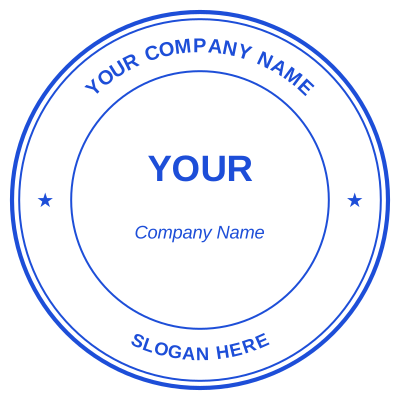
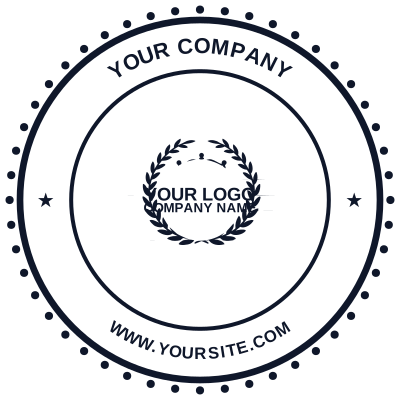
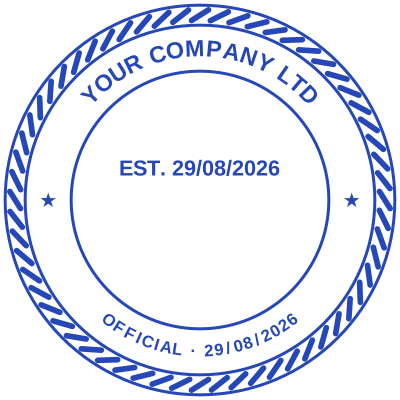

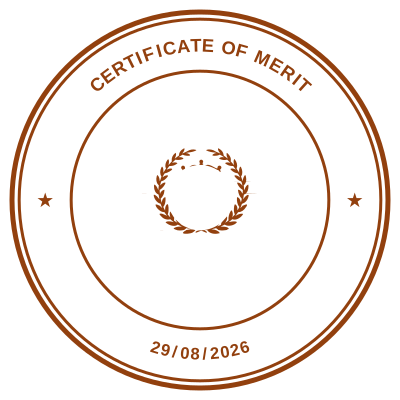
Open the stamp maker and start from any of these
Two related pages, so you land on the right one. How to create a digital logo stamp online is about preparing the logo file itself. Round stamps and circular seals is about the ring geometry in detail. This page is the seal as a whole: what it is made of, and how to create one.
The four parts of a seal logo
Every seal logo worth the name has these, and no more.
The border. One ring, or two with a gap between them. It is what closes the mark off from the page, and it is the reason a seal survives being small: the eye finds the circle before it reads anything.
The outer ring text. The name. Curved along the top, reading left to right around the arc. This is the line that has to be right, because it is the one somebody checks.
The inner ring text. The place, the year, the jurisdiction, or nothing. Curved along the bottom, and conventionally reading the other way round so it stays upright at the base of the circle.
The centre. A logo, a monogram, a registration number, a word like APPROVED, or a small device. It gets the middle because the middle is where there is room.
The mistake is putting the important information in the centre and decoration in the ring. It should be the other way round: the ring is what gets read at a glance.
How to create your own seal
- Pick a round template rather than starting from a blank circle. The seal templates already have the two rings positioned, which is the part that is fiddly to do from scratch.
- Type the outer ring text. The registered name for a company, your own name for a personal seal. The curved text refits itself as the name gets longer, so you are not respacing letters by hand.
- Type the inner ring text, or leave it empty. Town, state, year of formation, or the word that says what the seal does.
- Set the centre. Upload a logo and the white background comes out so it prints as ink rather than as a white card. Or use initials, or a number, or leave it plain.
- Choose one colour. A seal is one ink. Dark blue and black read as business, red reads as a chop or a certification, gold reads as an award.
- Look at it at 40mm before you commit. Not zoomed in. If the ring text is unreadable at the size it will actually be used, shorten it rather than shrinking the type.
Where a brand logo has to change to work as a seal
A brand logo is built to work large, in colour, with space around it. A seal is small, one colour, and crowded. Three things usually have to give:
- The wordmark goes. If the name is already in the ring, repeating it in the centre wastes the only roomy part of the design. Use the symbol alone.
- The colours flatten. Two colours become one. A gradient becomes a silhouette. This is not a compromise, it is what ink is.
- Thin strokes thicken. Anything under about 0.4mm at real size closes up or vanishes. Art and logo stamps goes through what breaks and why.
If the logo will not survive that, the honest answer is initials or a simple device in the centre with the name doing the work in the ring. Nobody has ever squinted at a seal wishing the emblem were more detailed.
Personalised seals: a name instead of a company
Not every seal is a company mark. The same four parts hold when the subject is a person.
- A monogram seal. Initials in the centre, full name in the ring. The classic personal seal, and the one that ages best.
- An address seal. Name in the ring, street address in the centre, for letters and parcels.
- A family or crest seal. A device in the middle, a name or motto around it. Closer to wax seals and emblem stamps in feel, and often intended to be pressed rather than printed.
- A professional seal. Your name and credential. Where the credential is licensed, the layout is usually specified for you rather than chosen, which stamp or seal by profession covers.
Personal seals can carry far less text than company ones, which is why they tend to look better. Two words in a ring beats seven.
Company seals, without the ceremony
For a company the content is fixed and short: the registered name in the outer ring, the town or jurisdiction in the inner ring, the registration number in the centre. That is a professional company seal, and typing it takes about three minutes.
Five worked examples, written out line by line by entity type, are in company stamp samples. Whether your company needs a seal at all is a different question, answered in company seals: are they still required, and the seal against the everyday stamp is in corporate seal or corporate stamp.
The one thing worth repeating: leave out anything that changes. A phone number or an email on a seal outlives its own accuracy.
Seal logo shapes: round, oval or something else
Round is the default and the one people read as a seal. An oval holds a longer name on one line and is common for real estate and professional marks. An octagon or a serrated edge reads as notarial or as certification rather than as identity.
Shape carries meaning here in a way it does not for a logo, so pick it for what you want the mark to say. Stamp shapes and sizes has the full comparison.
Read more: Seal, stamp seal or stamp: what people mean by each
Downloading your seal logo
A transparent PNG for documents and email, an SVG or print-ready PDF if a maker is cutting a die or an embosser plate from it. Which format does what is in stamp file formats.
Common questions about creating a seal
How do I create a seal?
Pick a round template, type the name into the outer ring, put a logo, monogram or registration number in the centre, and choose one ink colour. That is the whole job, and it takes about three minutes. The ring text refits its own spacing as the name changes length, so nothing has to be positioned by hand.
How can I create my own seal?
You can, and for a personal or business seal there is nothing to apply for. A seal is not issued or registered by any authority in most places, so you design it and use it. The exceptions are marks tied to a licence or a public office, which belong to the person or body they were issued to.
How do I create a seal logo?
Start from the ring rather than from the logo. Put the name in the outer ring, the place or year in the inner ring, and the logo in the centre where there is room for it. Reduce the logo to one colour and thicken any stroke thinner than about 0.4mm first, or it will close up at real size.
Can I create custom logo seals for my company?
Yes. A custom logo seal is your registered name in the outer ring, your town or jurisdiction in the inner ring, and your logo or registration number in the centre. Upload the logo and its white background is removed so the mark reads as ink on the page rather than as a white card.
Is there a personalised seal maker for a name rather than a company?
The same tool does both. For a personal seal use initials or a monogram in the centre and your full name in the ring, which carries far less text than a company mark and tends to look better for it. Address seals and family crest seals follow the same four-part arrangement.
The honest limits
Estamplab is a design tool. This page describes common commercial practice rather than giving legal advice, and what a seal must carry for a particular document is set by the authority receiving it, so check the requirement with them.
Only upload a logo you own or are licensed to use, and only produce a mark you or your organisation are entitled to use. Applying a seal that belongs to somebody else is forgery, whatever it was made with.
The rest of the range is on the stamp and seal directory.
Every kind of stamp and seal
- Notary stamps and seals
- Rubber stamps
- Rubber stamp maker
- Self-inking stamps
- Office stamps
- Official stamps
- Company seals
- Corporate stamps and seals
- Company chops
- Seals for civil servants
- Justice and court stamps
- Legal and advocate stamps
- Certified true copy stamps
- Medical stamps
- Pharmacy stamps
- Veterinary stamps
- Engineer and architect seals
- Land surveyor seals
- Bank stamps
- School and principal stamps
- Teacher and marking stamps
- University and college seals
- Library stamps
- Inspection stamps
- Courier and logistics stamps
- Construction and site stamps
- Real estate stamps
- Hotel and restaurant stamps
- Church and charity seals
- Tender and bid stamps
- HR and payroll stamps
- Received and paid stamps
- Confidential and draft stamps
- Signature stamps
- Date stamps
- Custom band stamps
- Numbering stamps
- Address stamps
- Monogram stamps
- Wedding stamps
- Gift and craft stamps
- Art and logo stamps
- Wax and foil seals
- Stamp or seal, by profession